Technology Company

Technology Company

Redmond, WA

Project Type

Campus Wayfinding

Sector

Technology

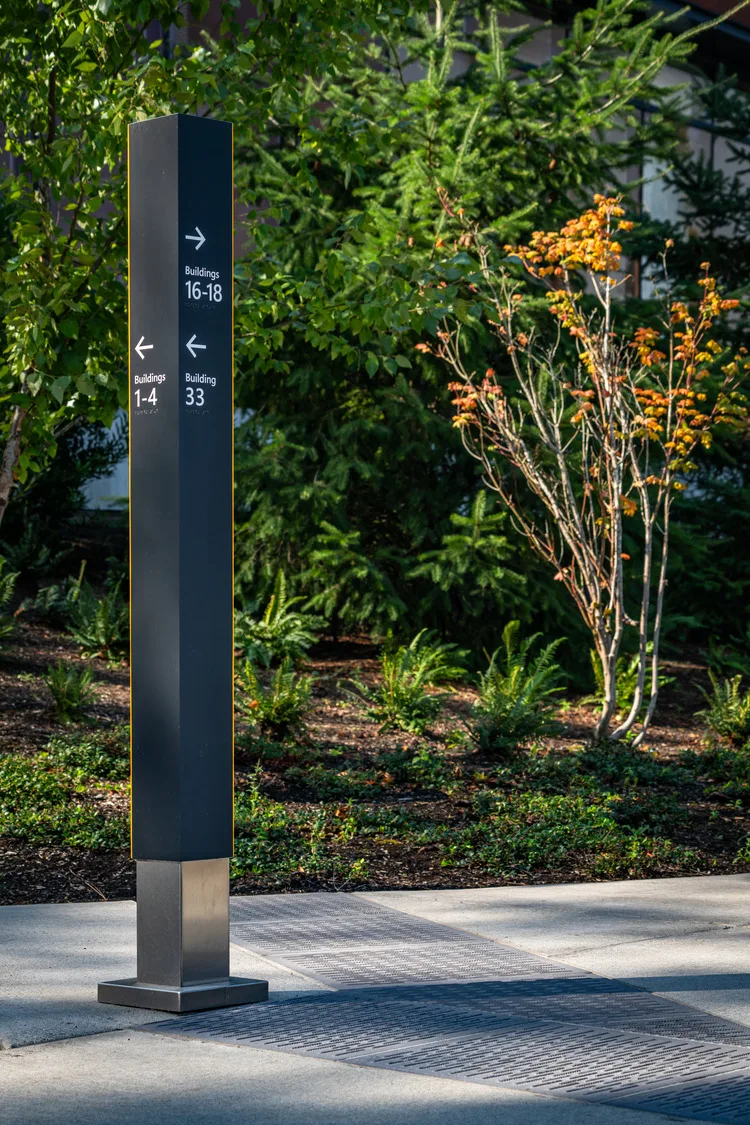
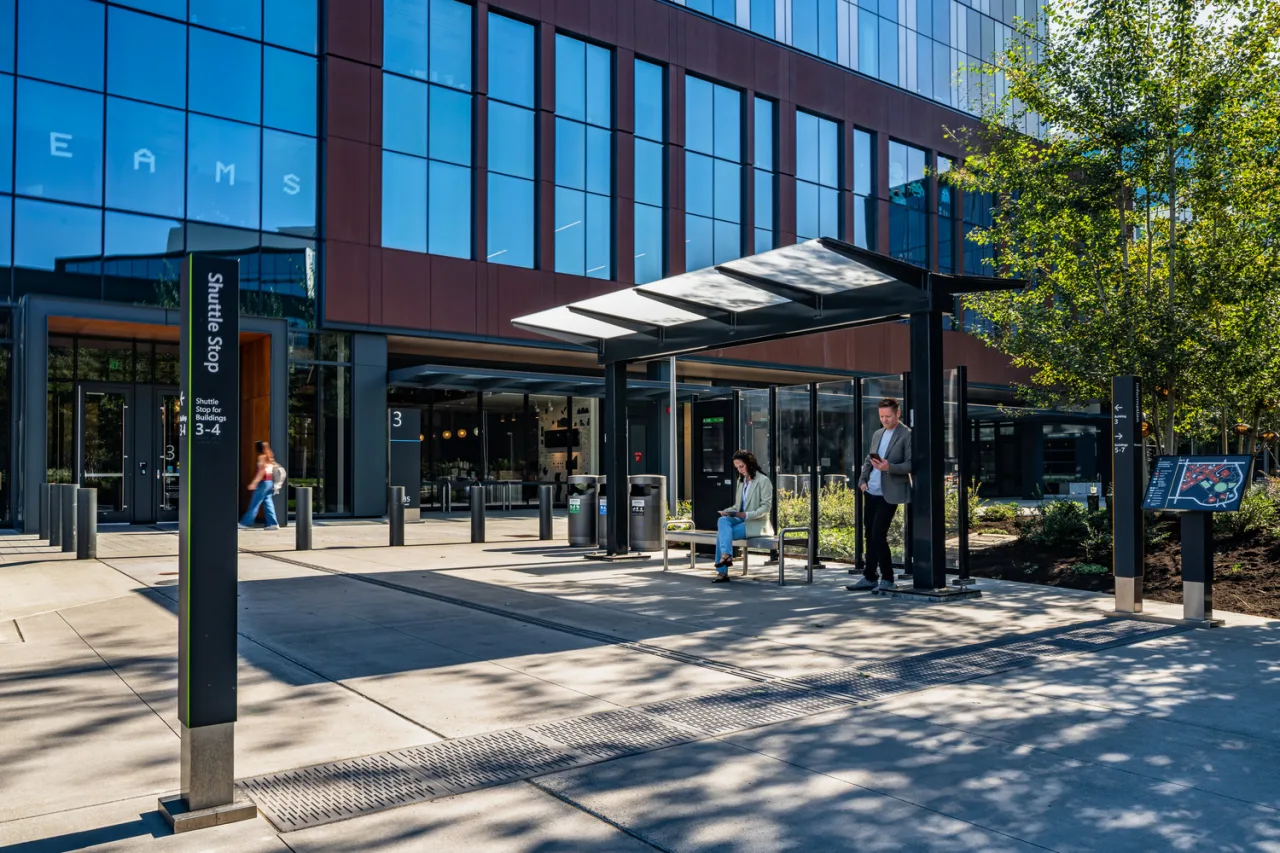
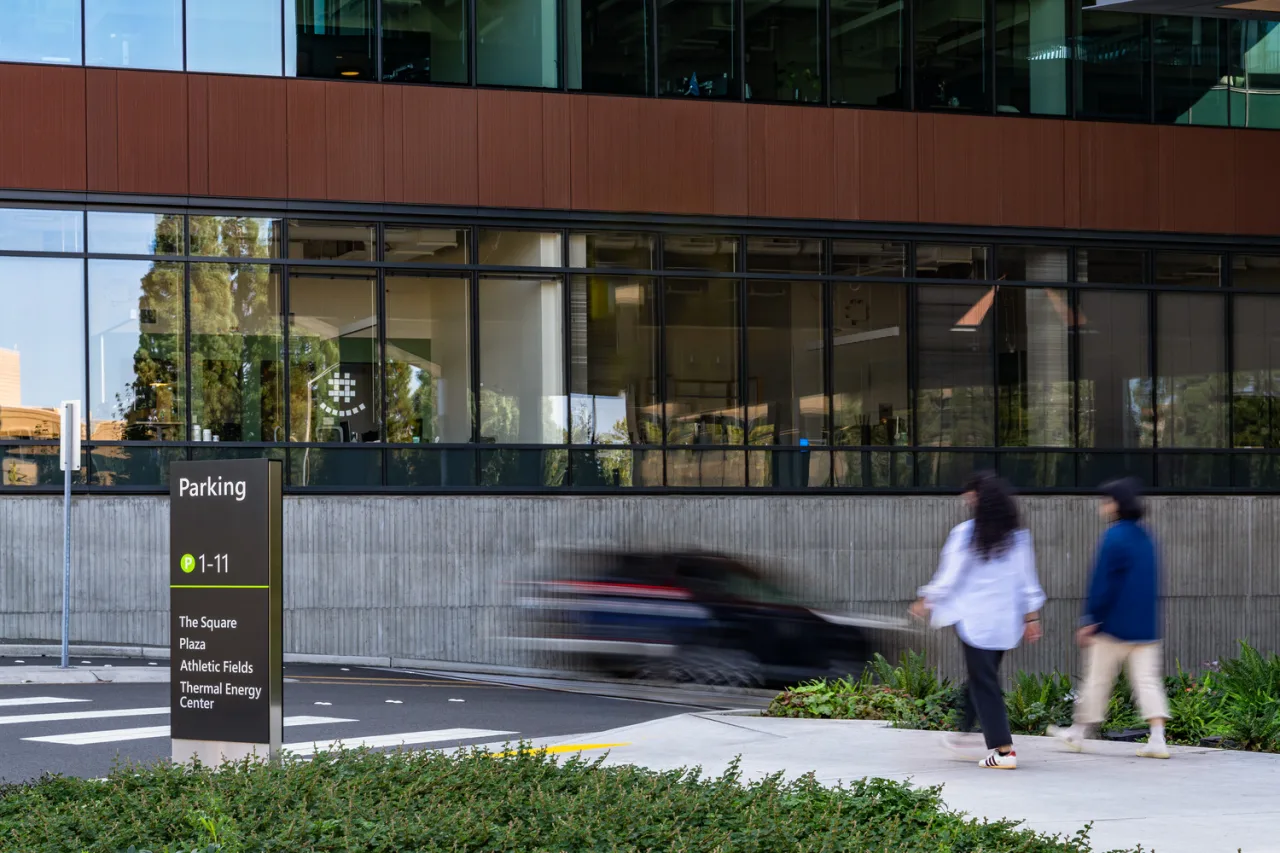
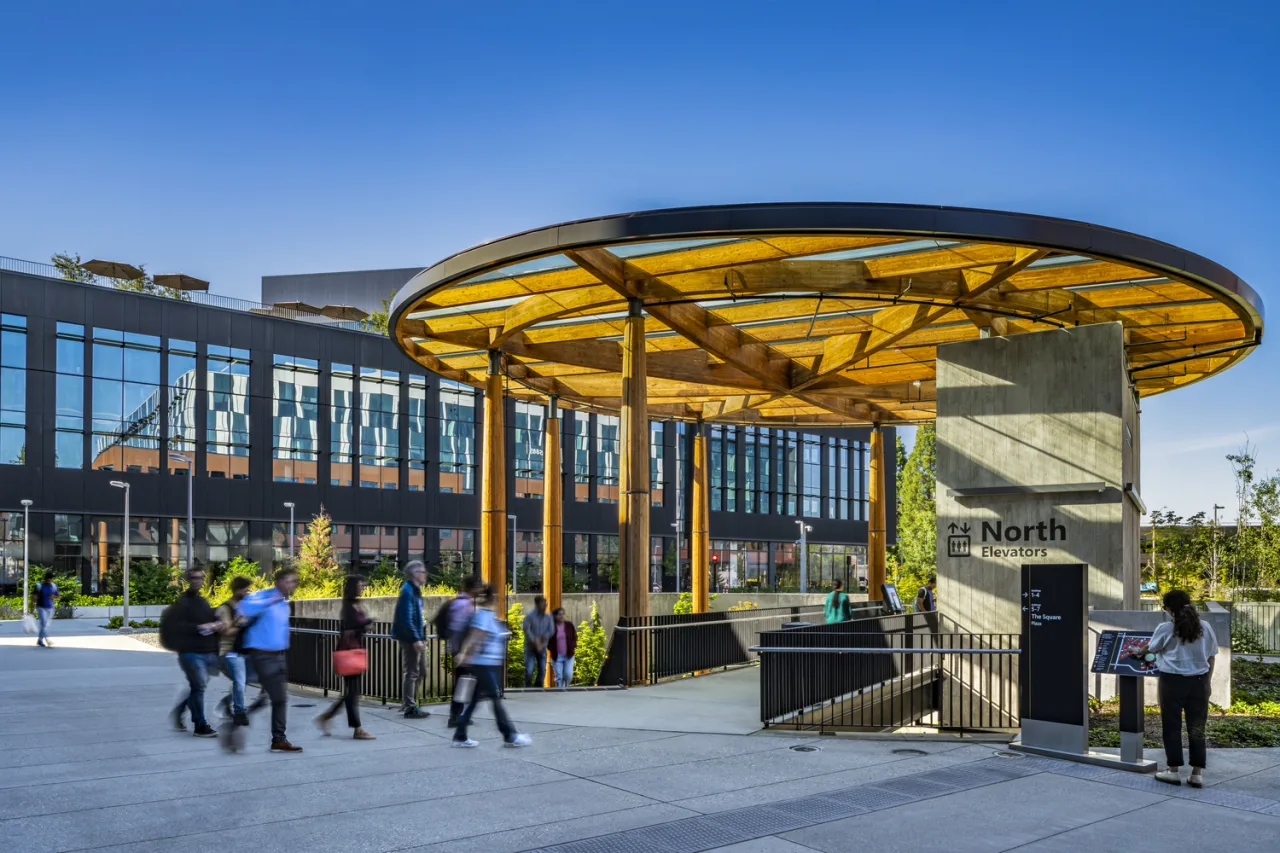
Across a 75-acre Redmond campus, IA’s inclusive wayfinding system gives more people the confidence to navigate independently. Visual, tactile, and spatial cues support different physical, visual, auditory, and cognitive needs, while environmental storytelling connects movement to the landscape—advancing the company’s commitment to accessibility, belonging, and a more usable campus experience.
Inclusive Navigation Builds Independence
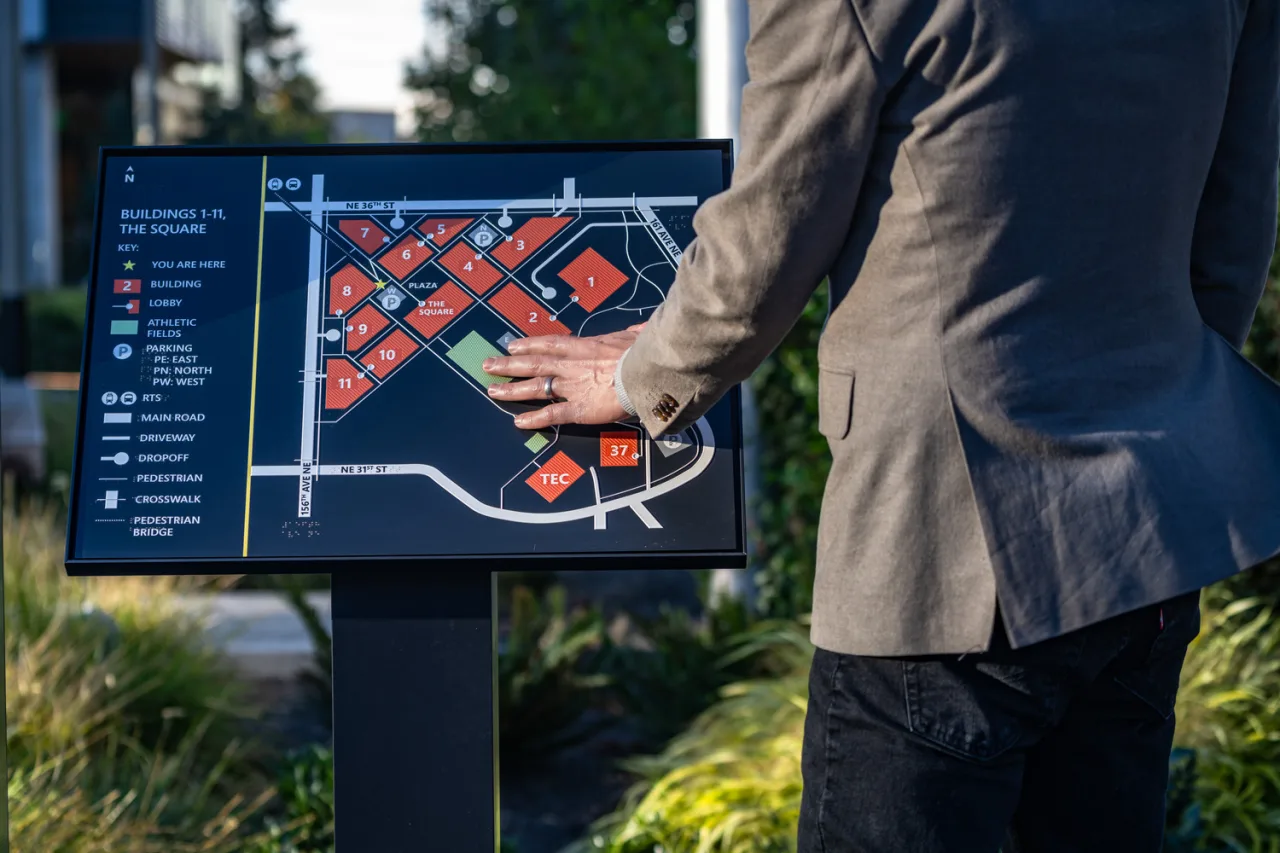
Accessibility shaped the system from its first line. Tactile paving leads to key information points. Maps combine raised lettering, Braille, tactile content, clear hierarchy, and intuitive orientation. Signs appear consistently at decision points, supported by landmarks and environmental cues that help people build a mental map over time. No single sense is expected to do all the work. By layering visual, tactile, and spatial information, the campus becomes easier to understand for more people arriving on foot, by transit, or in a vehicle. Independence is treated not as a special accommodation, but as a shared design goal.

Wayfinding Reveals Environmental Stewardship
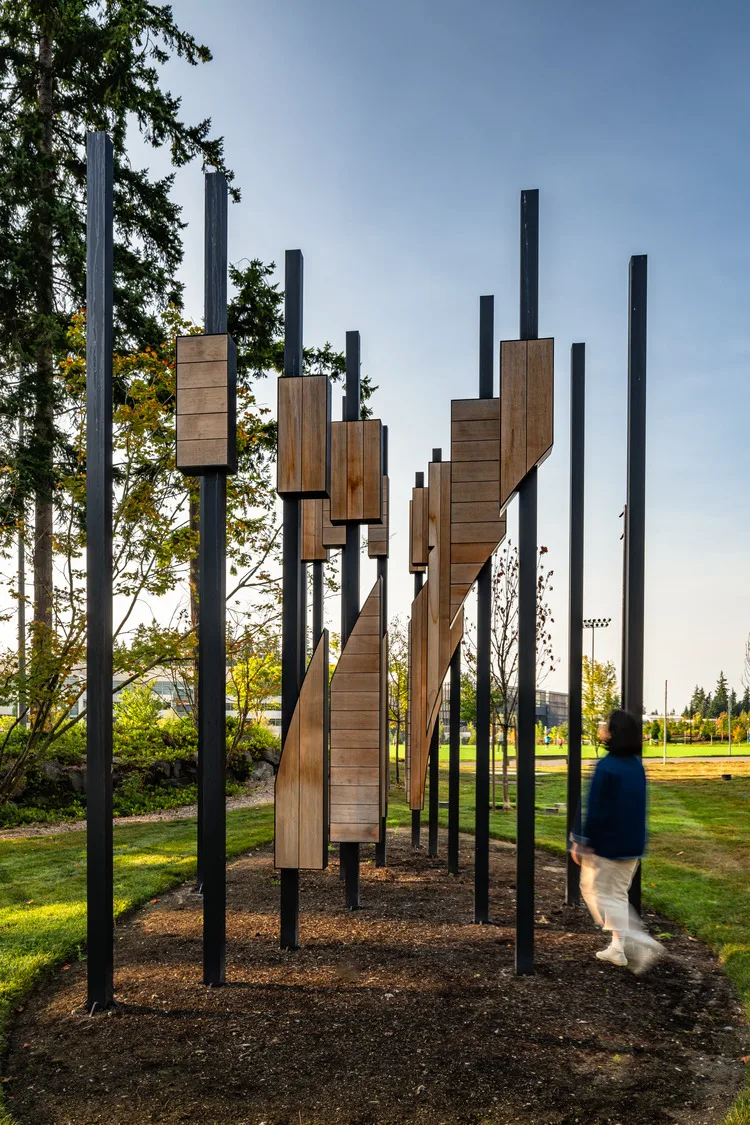
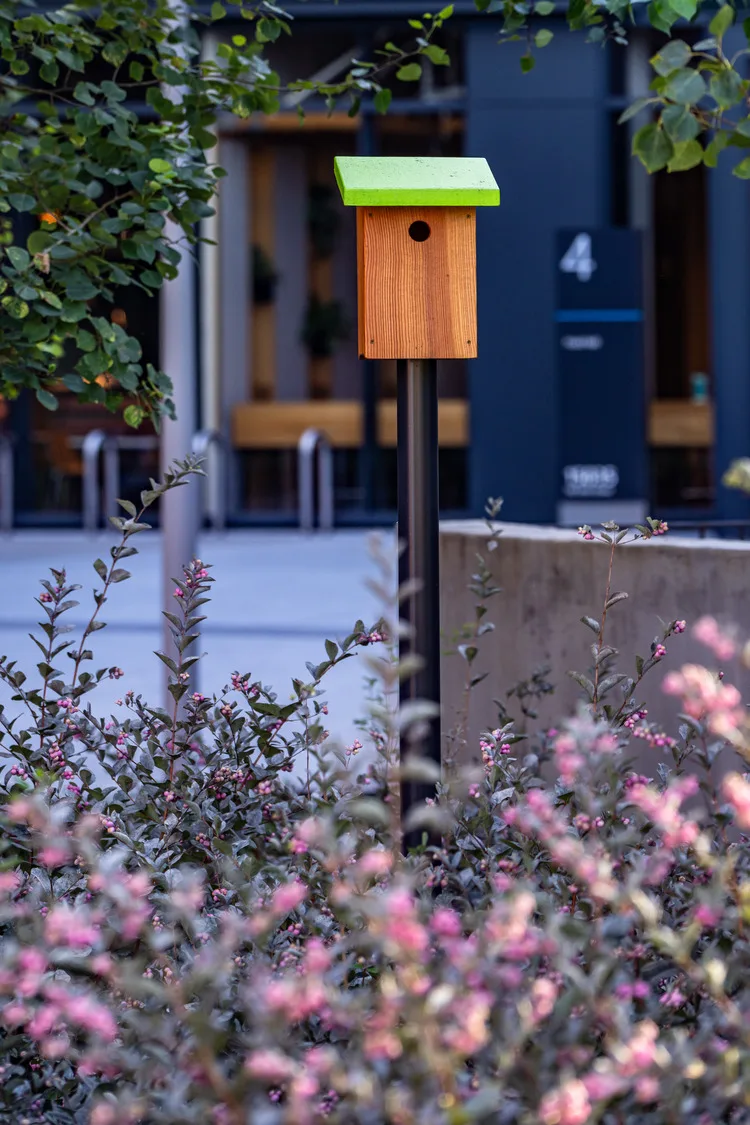
Interpretive signage reveals the campus’s environmental work—native planting, restored habitat, water management, and the life of a continuous green corridor that links major destinations. Douglas firs salvaged on site become part of the signage itself, giving each marker a material relationship to the place. Sculptural landmarks support recognition and discovery. A large “7,” inspired by the story of a once-missing campus building, resolves only from particular viewpoints. Perspective becomes both a navigation tool and a moment of discovery. The system does more than direct traffic. It helps people read the values embedded in the campus: access, stewardship, curiosity, and care. With every route, the built and natural environments explain one another.
Project Type

Campus Wayfinding

Market

Commercial

Across a 75-acre Redmond campus, IA’s inclusive wayfinding system gives more people the confidence to navigate independently. Visual, tactile, and spatial cues support different physical, visual, auditory, and cognitive needs, while environmental storytelling connects movement to the landscape—advancing the company’s commitment to accessibility, belonging, and a more usable campus experience.
Inclusive Navigation Builds Independence
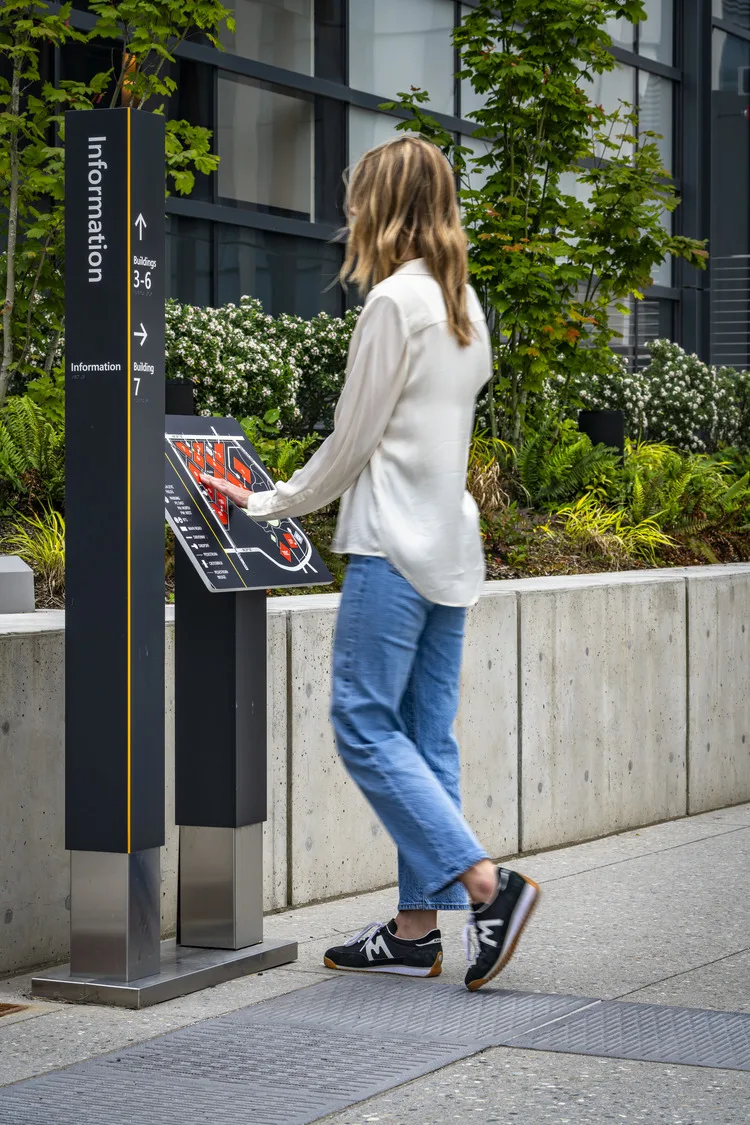
Accessibility shaped the system from its first line. Tactile paving leads to key information points. Maps combine raised lettering, Braille, tactile content, clear hierarchy, and intuitive orientation. Signs appear consistently at decision points, supported by landmarks and environmental cues that help people build a mental map over time. No single sense is expected to do all the work. By layering visual, tactile, and spatial information, the campus becomes easier to understand for more people arriving on foot, by transit, or in a vehicle. Independence is treated not as a special accommodation, but as a shared design goal.
Wayfinding Reveals Environmental Stewardship
Interpretive signage reveals the campus’s environmental work—native planting, restored habitat, water management, and the life of a continuous green corridor that links major destinations. Douglas firs salvaged on site become part of the signage itself, giving each marker a material relationship to the place. Sculptural landmarks support recognition and discovery. A large “7,” inspired by the story of a once-missing campus building, resolves only from particular viewpoints. Perspective becomes both a navigation tool and a moment of discovery. The system does more than direct traffic. It helps people read the values embedded in the campus: access, stewardship, curiosity, and care. With every route, the built and natural environments explain one another.

Have a project in mind?
Let's Talk

Start an Inquiry

Get in Touch
We care about protecting your data


We care about protecting your data
How we use your data

On this website we use cookies and similar technologies to process device information and (anonymised) personal data. Processing serves the integration of content, external services and third-party elements, statistical analysis/measurement, integration of social media and IT security. Depending on the function, data is passed on to and processed by third parties. When integrating social media and interactive elements, data may also be stored by providers outside the jurisdiction of the European Union; despite careful selection, a level of protection equivalent to European data protection standards cannot be guaranteed. All consents are voluntary, not required for the use of our website and can be revoked or individually adjusted at any time via the "Adjust privacy settings" link in the footer.