City of Sandy Springs

City of Sandy Springs

Sandy Springs, GA

Project Type

City Center

Square Footage

200,000

Sector

Government, Civic, Entertainment

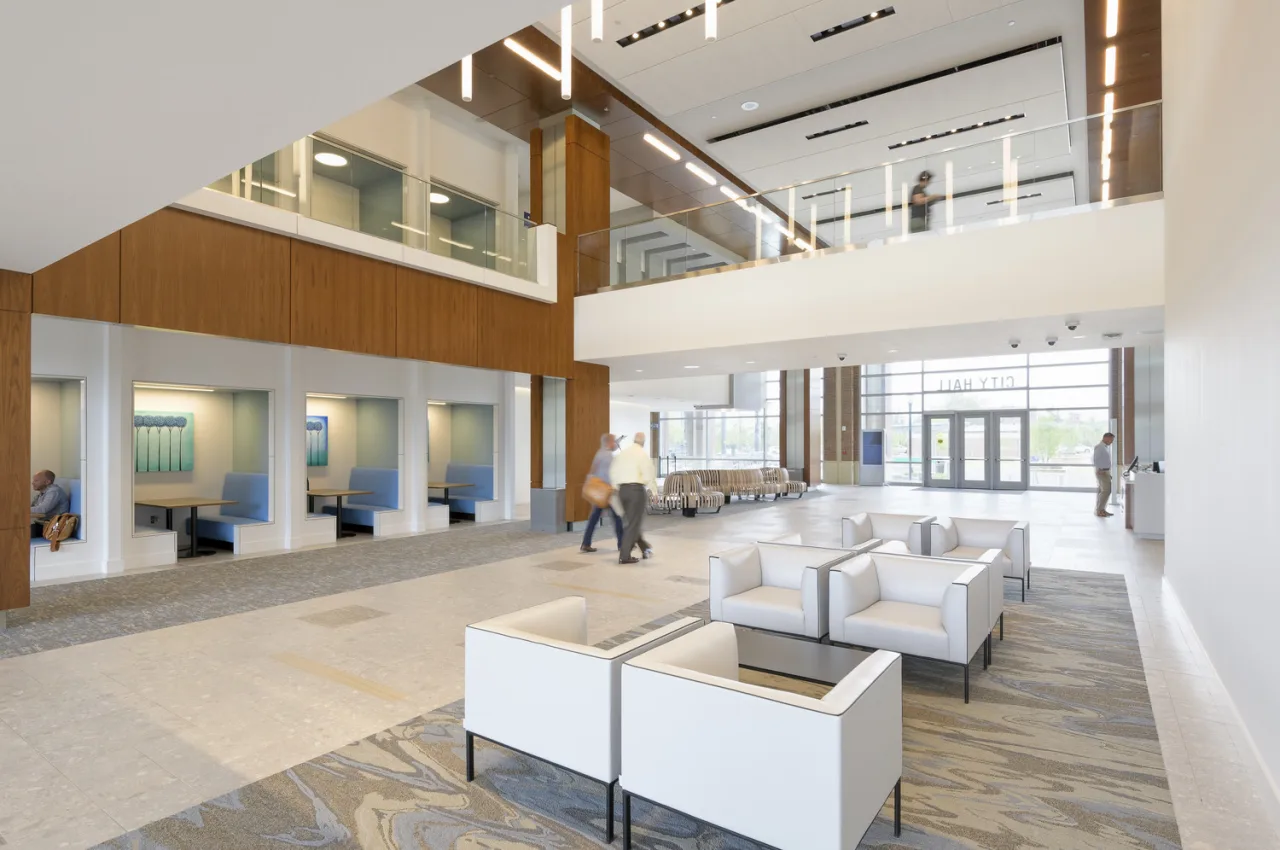
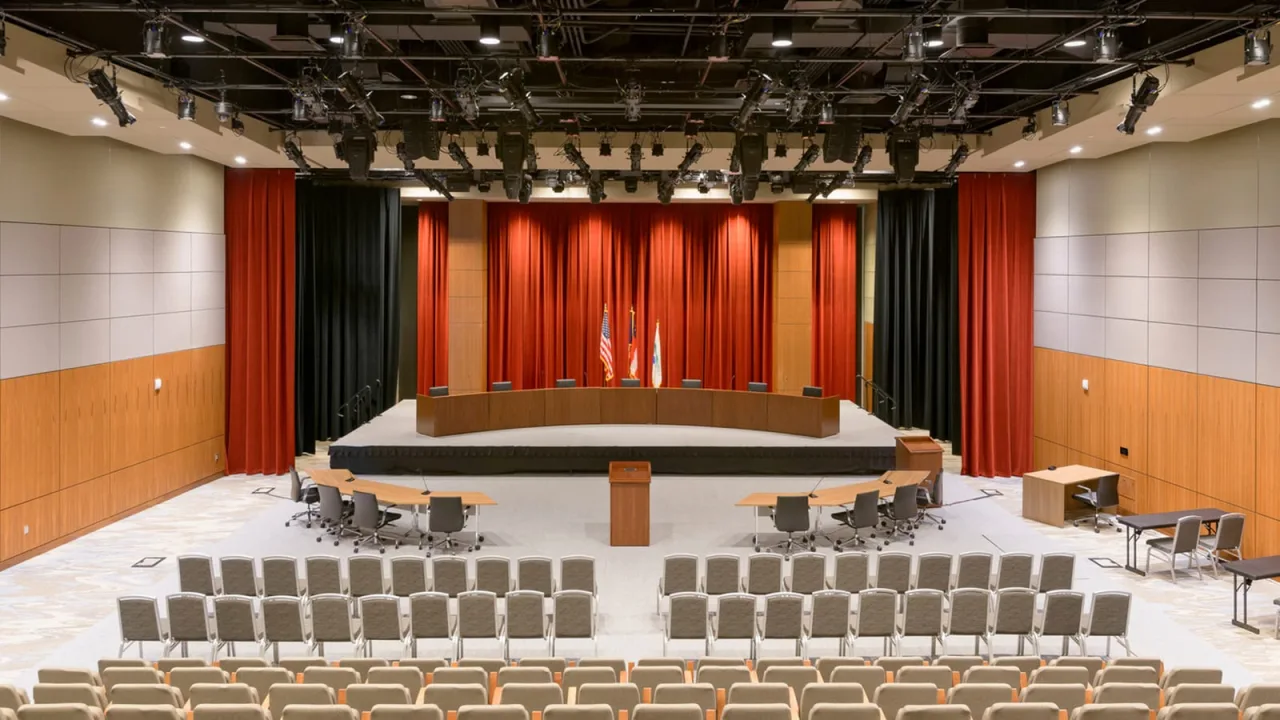
Sandy Springs City Center brings government, culture, and community together within a walkable civic destination. IA used research, planning, interiors, graphics, and wayfinding to make a complex public campus easier to understand, navigate, and use, while giving the city a cohesive identity grounded in local character.

Research Defines Civic Priorities
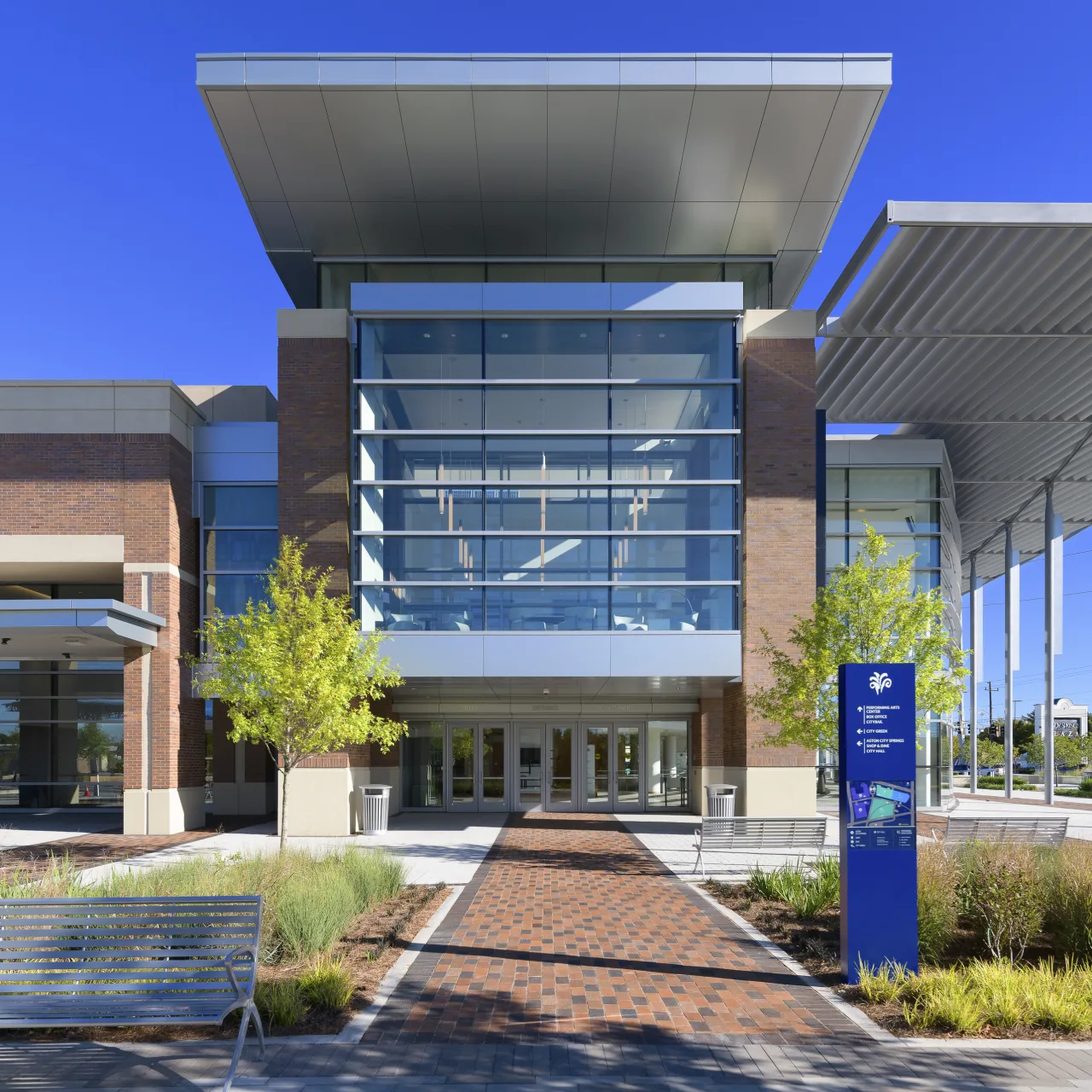
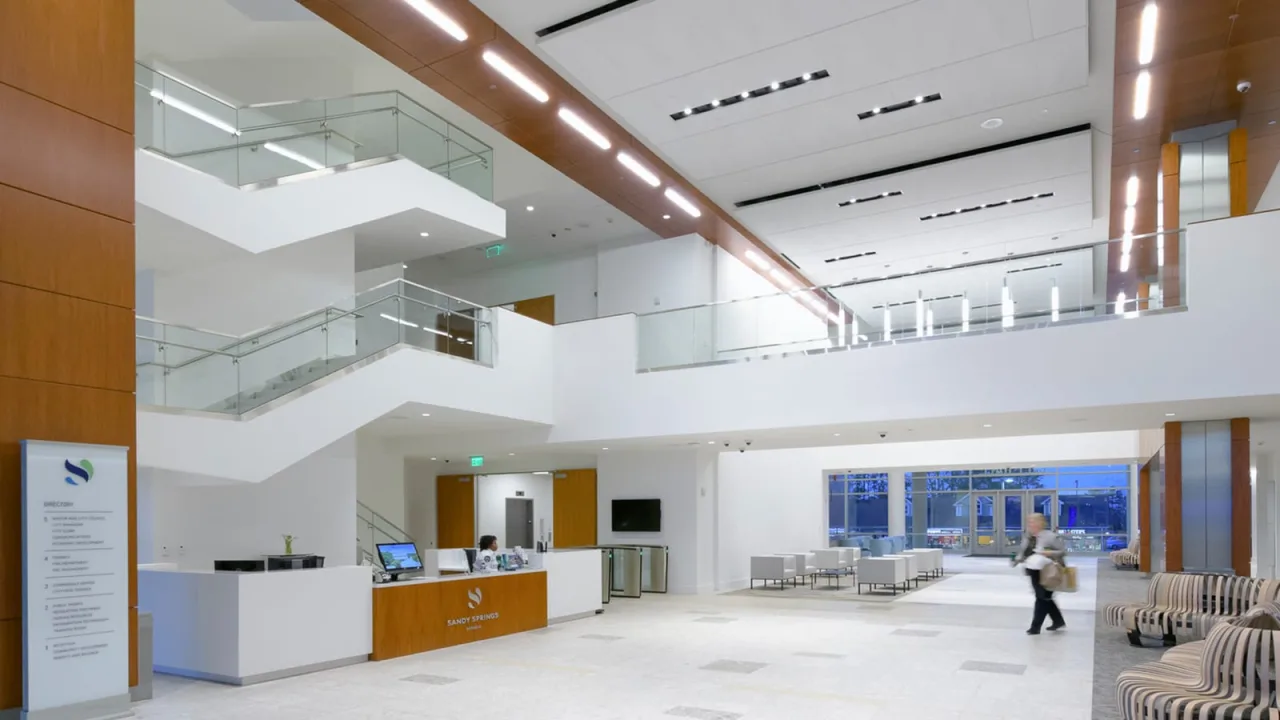
A data-driven strategy engagement established priorities around access, operations, workstyles, and identity. IA translated those findings into concept plans and a coordinated design language inspired by the water, clay, earth, and stone of local springs. That language extends from workplace and public interiors into a robust wayfinding system spanning site, exterior, garage, and interior environments. Twelve signage types create a consistent family of visual cues and landmarks, helping residents, visitors, and employees understand where they are and where to go while reinforcing a distinct sense of place.

Access, Security, Flexibility Align
Multiple government entities and public functions occupy the vertical center, making circulation and access central to the operating model. Community Development, Public Works, and other resident-facing departments are placed on lower levels for convenient service. Above, low workstations, shared layout tables, and a universal private-office approach support collaboration and future change across departments. A monumental stair clarifies movement through the lobby while giving the public realm a recognizable center. The planning connects staff and residents without blurring security boundaries. By organizing services around how people arrive and work, IA helped transform a collection of programs into a cohesive civic workplace designed to remain useful as the city evolves.

Ian Reves

Atlanta's Managing Director

Project Type

City Center

Square Footage

200000

Market

Commercial

Sandy Springs City Center brings government, culture, and community together within a walkable civic destination. IA used research, planning, interiors, graphics, and wayfinding to make a complex public campus easier to understand, navigate, and use, while giving the city a cohesive identity grounded in local character.

Research Defines Civic Priorities
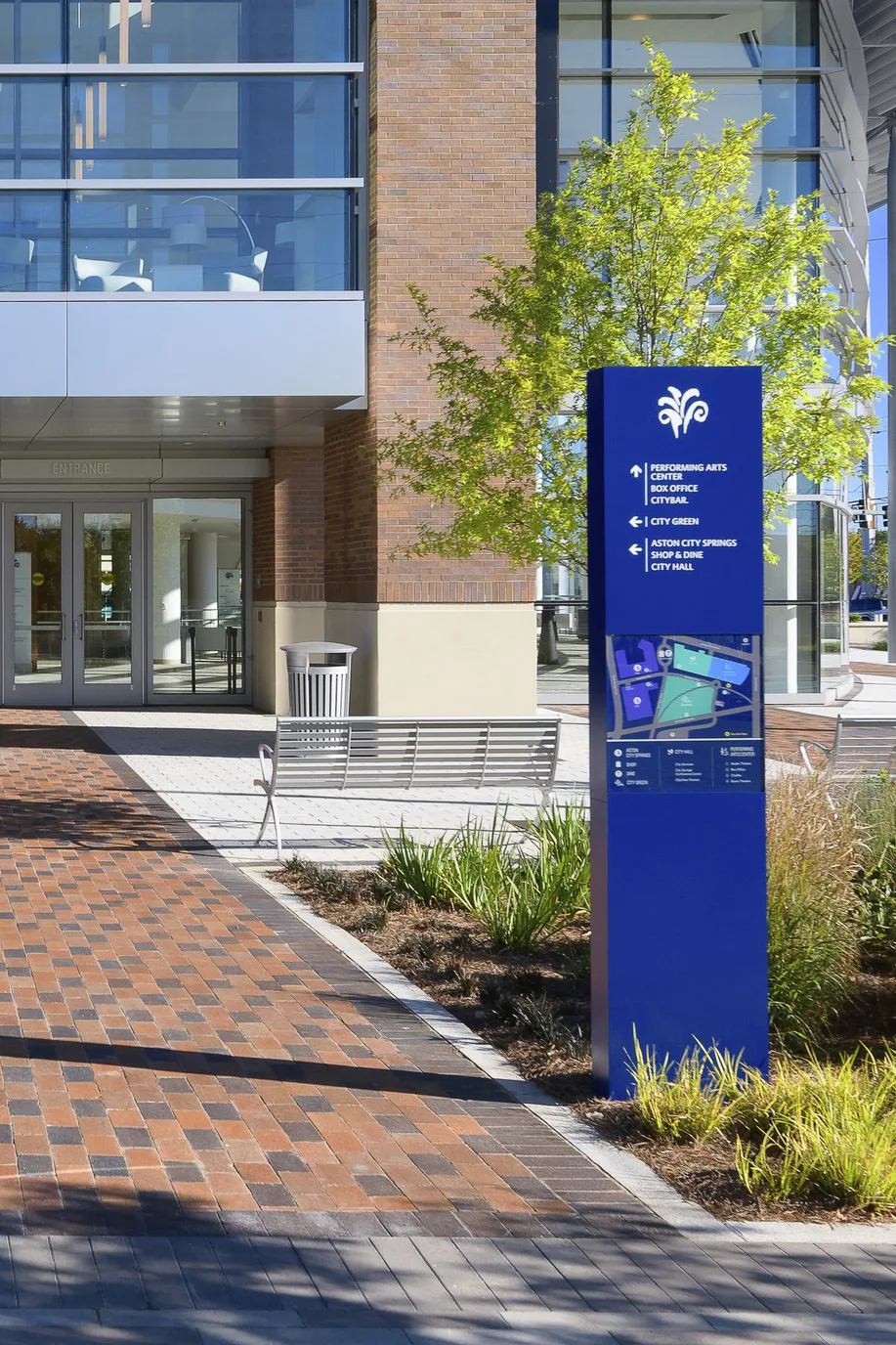
A data-driven strategy engagement established priorities around access, operations, workstyles, and identity. IA translated those findings into concept plans and a coordinated design language inspired by the water, clay, earth, and stone of local springs. That language extends from workplace and public interiors into a robust wayfinding system spanning site, exterior, garage, and interior environments. Twelve signage types create a consistent family of visual cues and landmarks, helping residents, visitors, and employees understand where they are and where to go while reinforcing a distinct sense of place.
Access, Security, Flexibility Align
Multiple government entities and public functions occupy the vertical center, making circulation and access central to the operating model. Community Development, Public Works, and other resident-facing departments are placed on lower levels for convenient service. Above, low workstations, shared layout tables, and a universal private-office approach support collaboration and future change across departments. A monumental stair clarifies movement through the lobby while giving the public realm a recognizable center. The planning connects staff and residents without blurring security boundaries. By organizing services around how people arrive and work, IA helped transform a collection of programs into a cohesive civic workplace designed to remain useful as the city evolves.

Have a project in mind?
Let's Talk

Start an Inquiry

Get in Touch

We care about protecting your data


We care about protecting your data
How we use your data

On this website we use cookies and similar technologies to process device information and (anonymised) personal data. Processing serves the integration of content, external services and third-party elements, statistical analysis/measurement, integration of social media and IT security. Depending on the function, data is passed on to and processed by third parties. When integrating social media and interactive elements, data may also be stored by providers outside the jurisdiction of the European Union; despite careful selection, a level of protection equivalent to European data protection standards cannot be guaranteed. All consents are voluntary, not required for the use of our website and can be revoked or individually adjusted at any time via the "Adjust privacy settings" link in the footer.