InterContinental Rome Ambasciatori Palace

InterContinental Rome Ambasciatori Palace

Rome, Italy

Project Type

Hotel

Sector

Hospitality

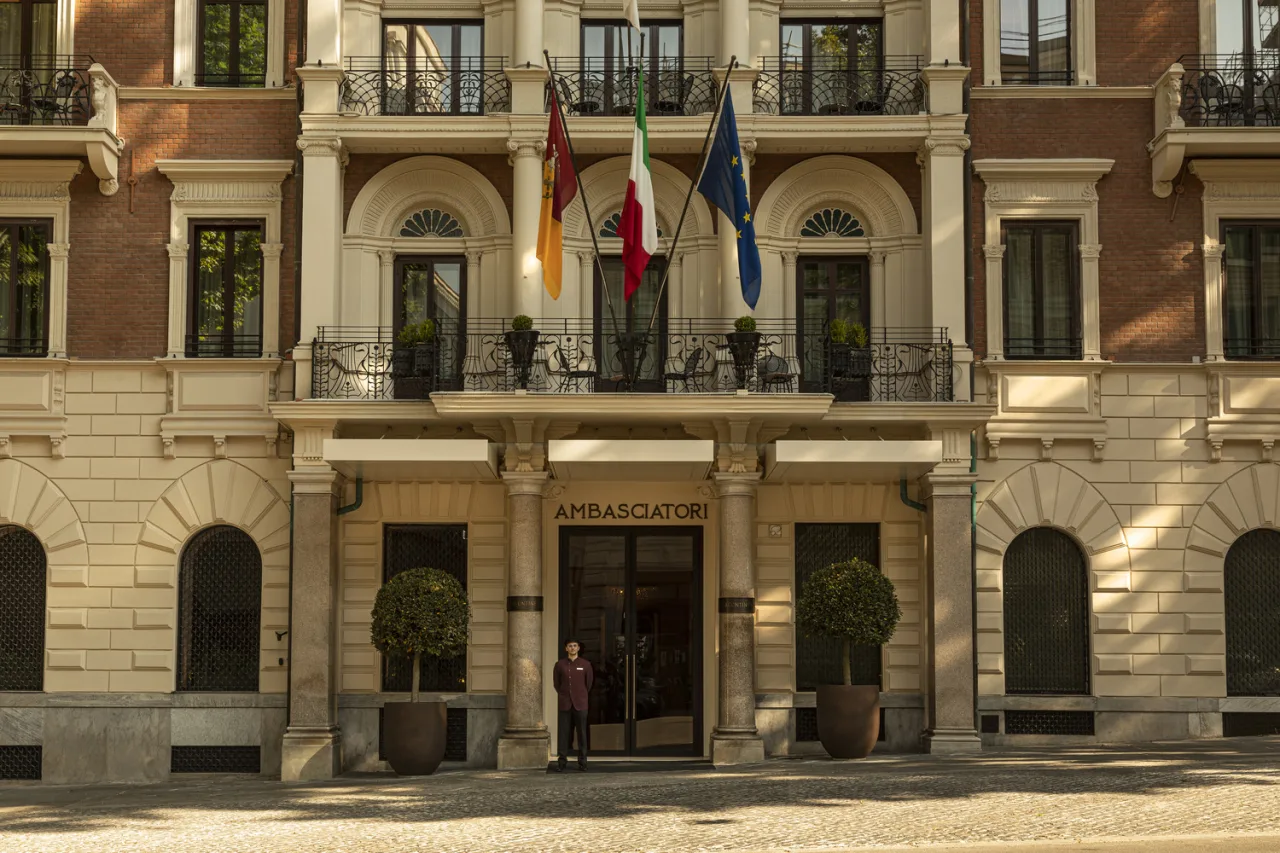
On Via Veneto, a former embassy returns to the business of receiving guests. Built in 1900, the neo-Renaissance Ambasciatori Palace carries the scale and ceremony of another Rome—columns, marble, ornamental plasterwork, and a staircase with more than a little drama. Its transformation into the InterContinental Rome keeps that history in view while making the experience warmer, more intimate, and decidedly of the present.
The Art of Arrival
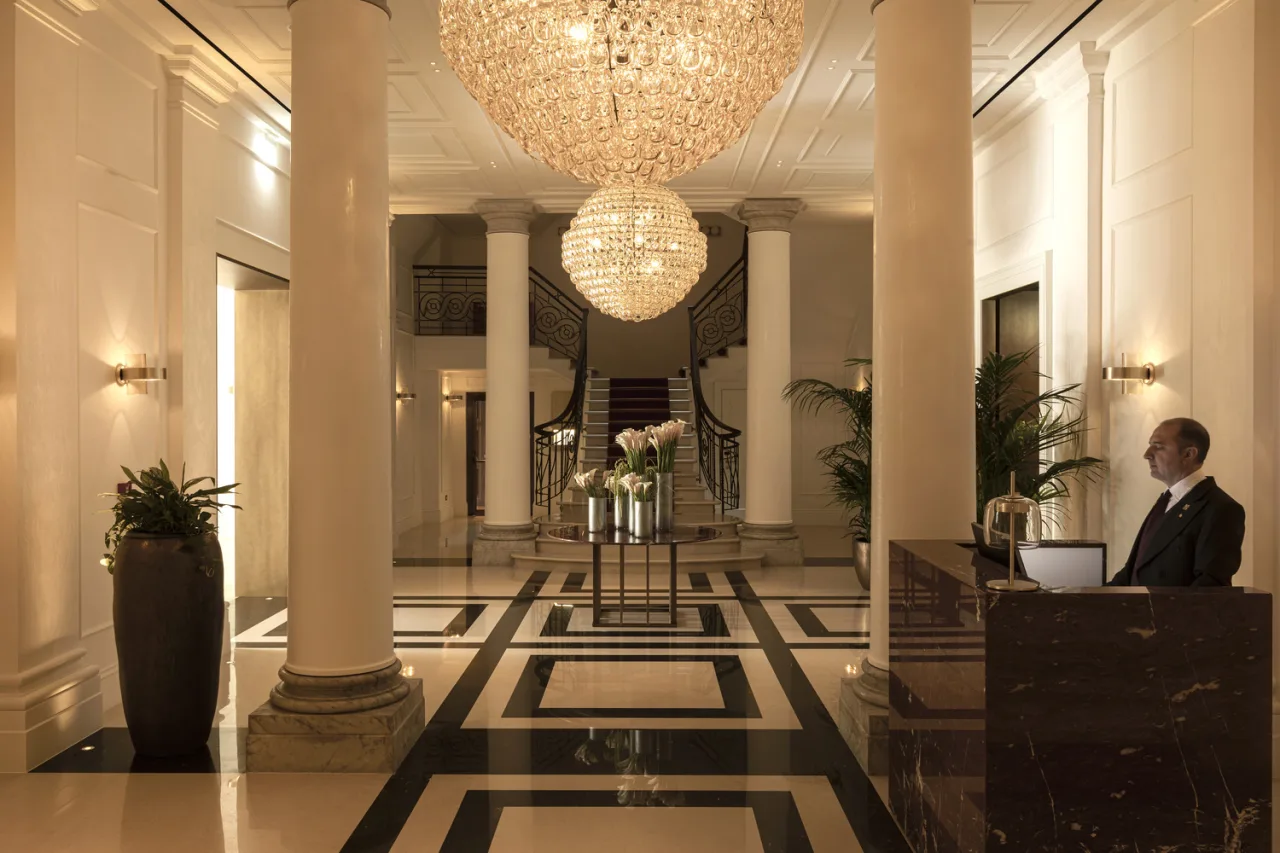
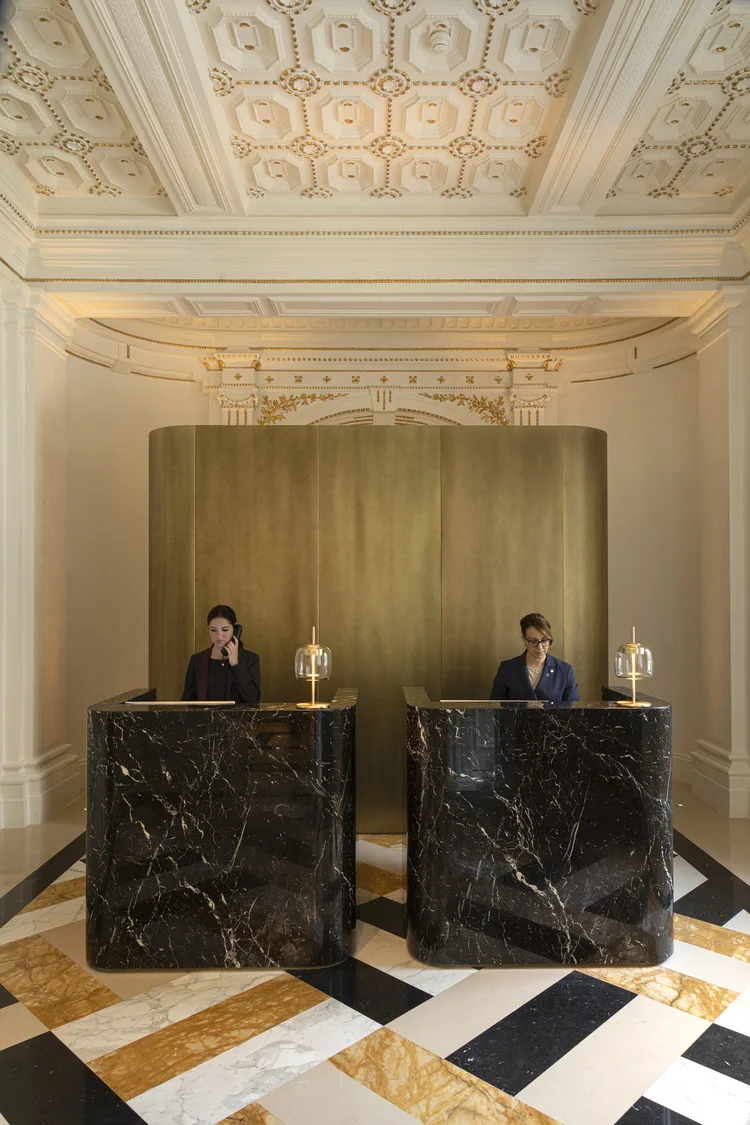
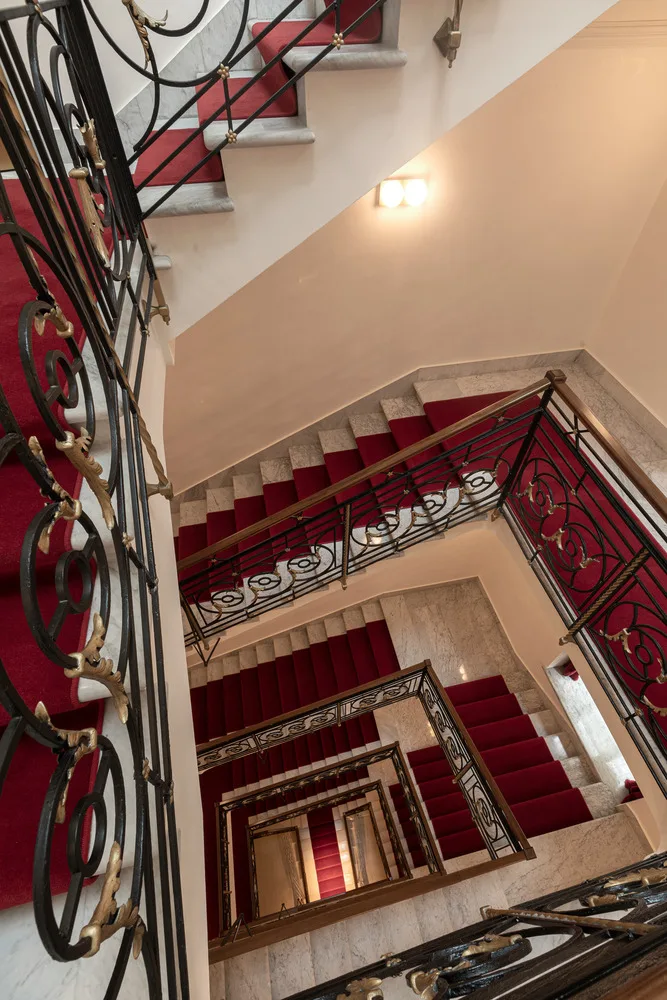
The building knows how to make an arrival. Original columns and plasterwork set the stage, joined by marble, brass, gold-toned doors, and bespoke chandeliers. At the center, the historic staircase rises through the hotel, its eclectic detailing inspired by Rome’s opera house.

Rather than quieting that theatricality, the new interventions give it focus. Brass screens filter views. Red marble marks thresholds. Light draws the eye through the room and toward the stair, where white Marmorino brings the original ornament into relief and a deep red runner traces the ascent.

Old and new are easy to distinguish, but neither asks for the last word.

A More Intimate Rome
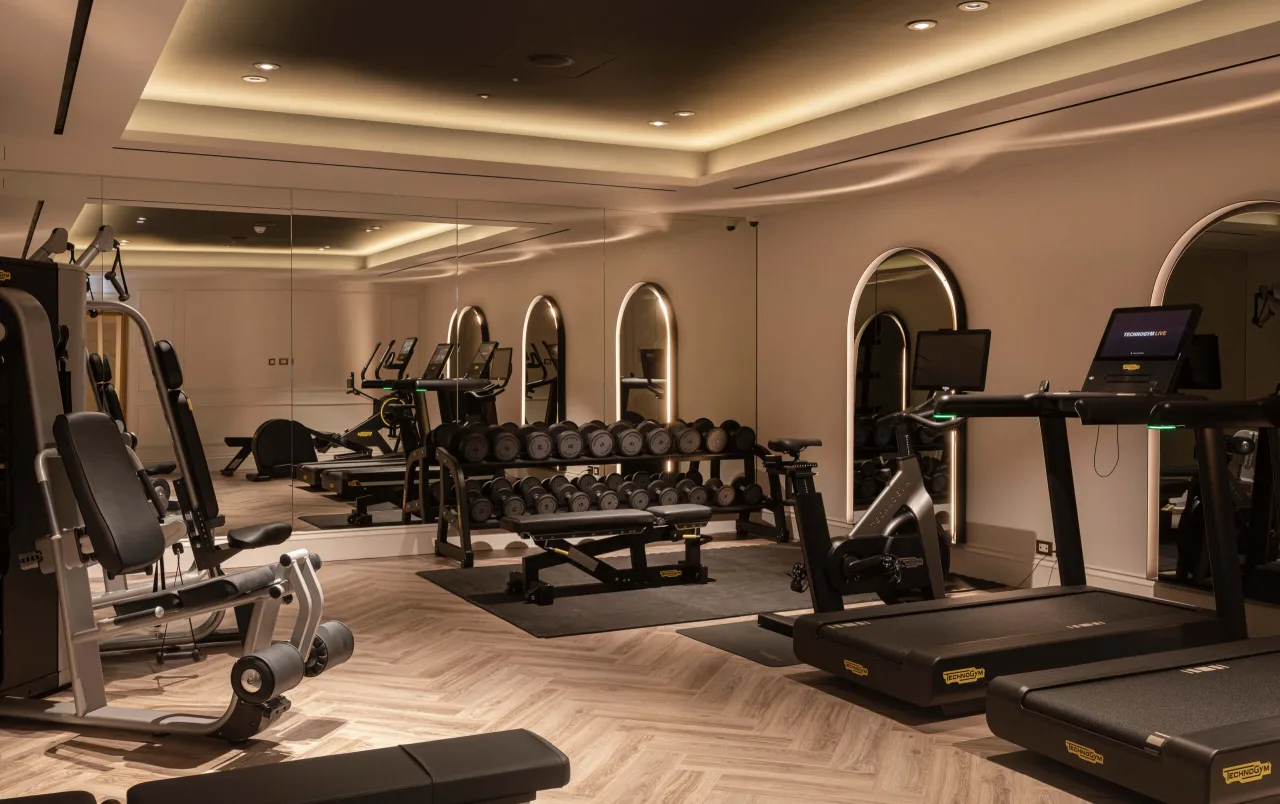
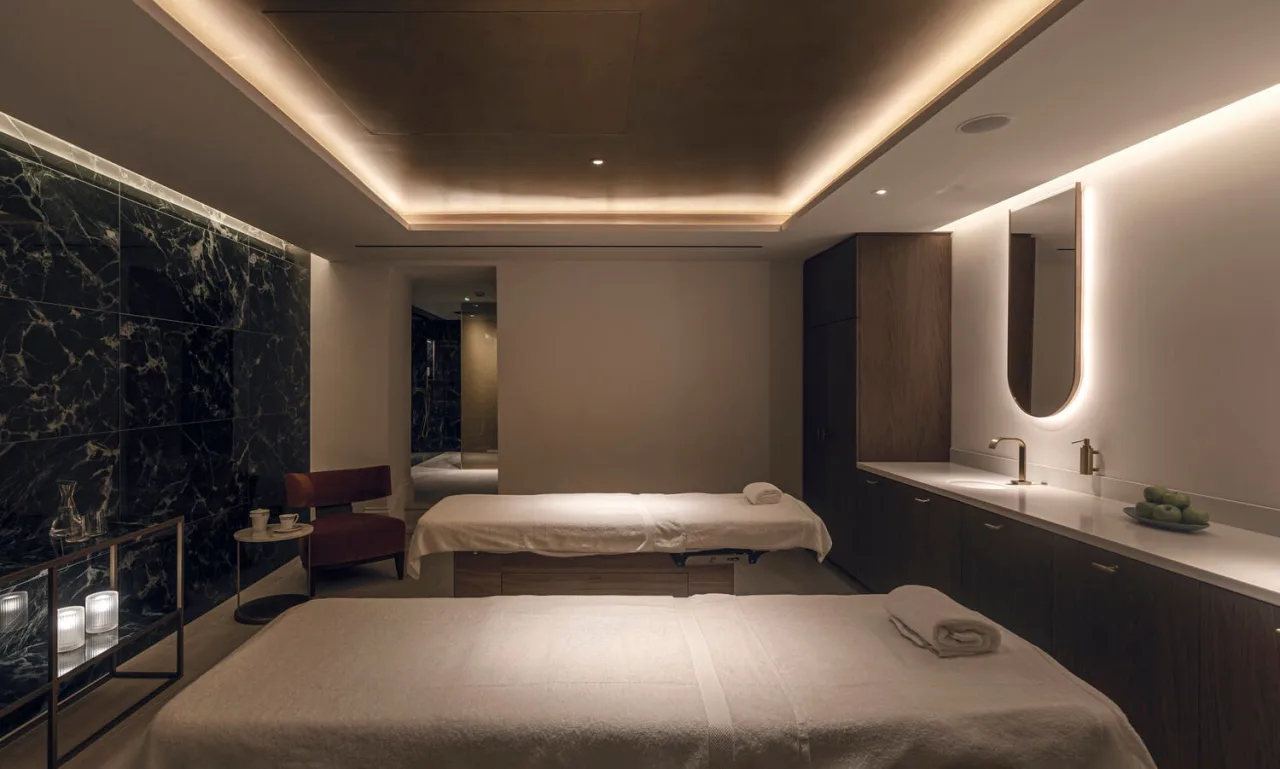
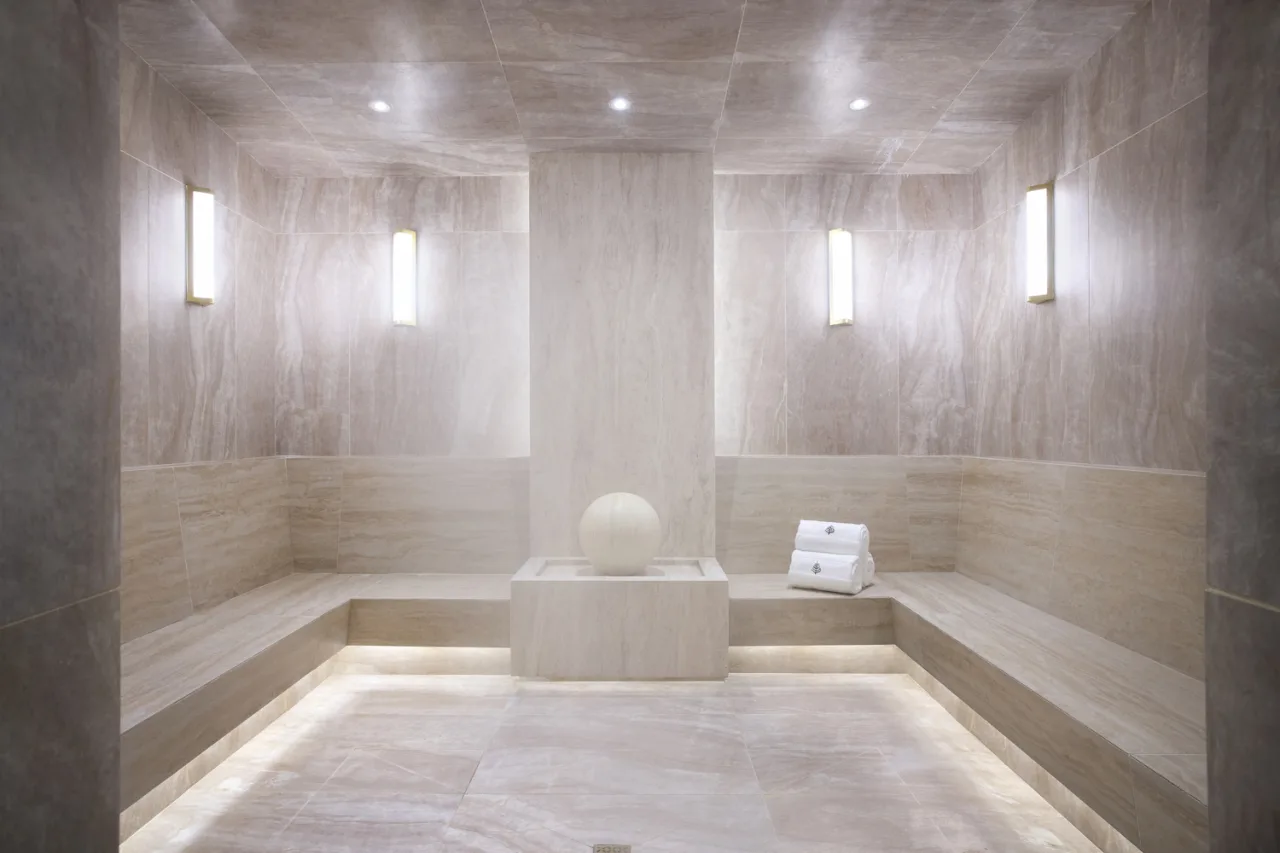
Away from the ceremony of arrival, the hotel becomes more private. The mezzanine moves into softer forms, wellness suites, and green Italian marble before the experience shifts again across 160 guestrooms and suites.

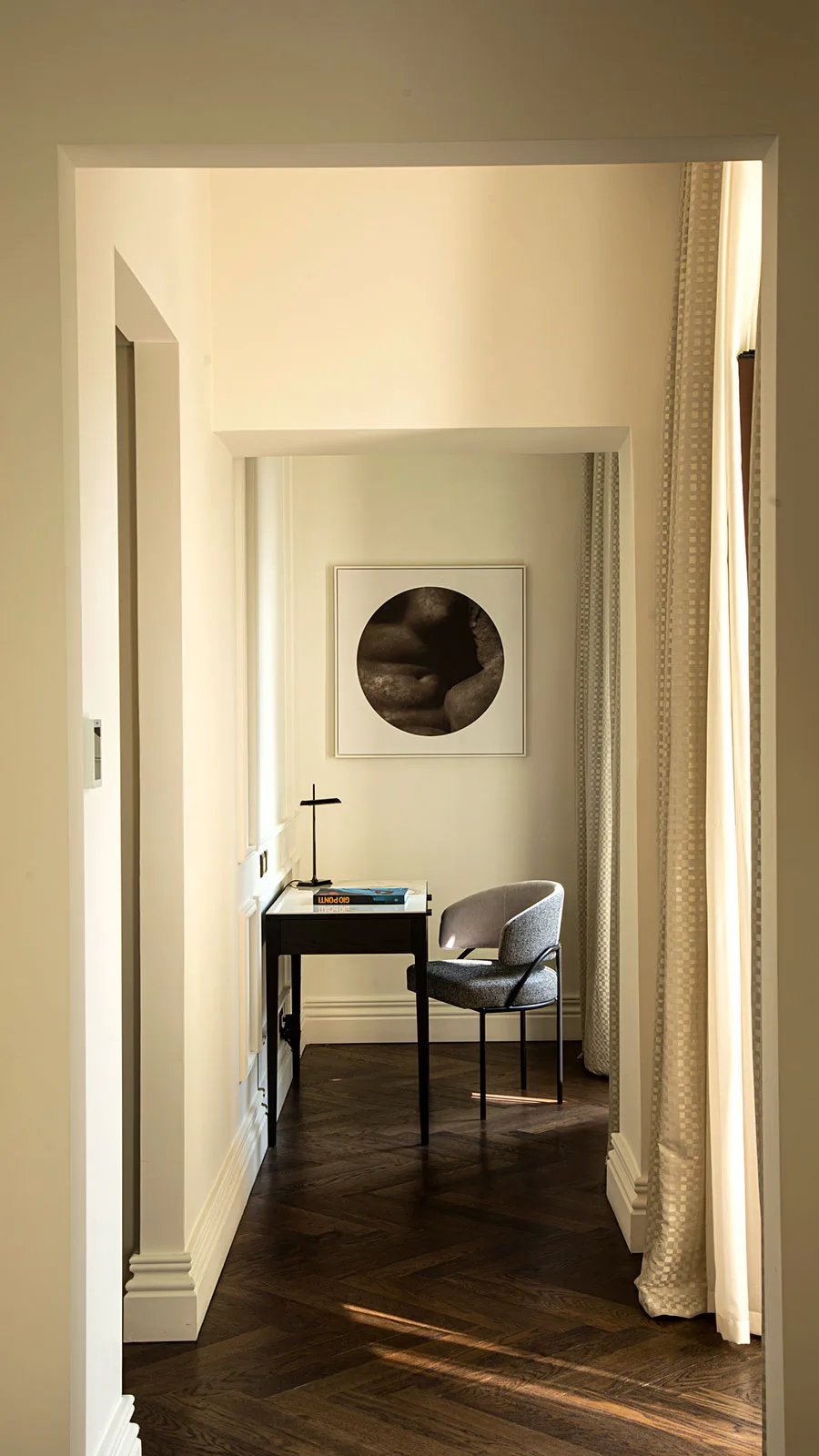
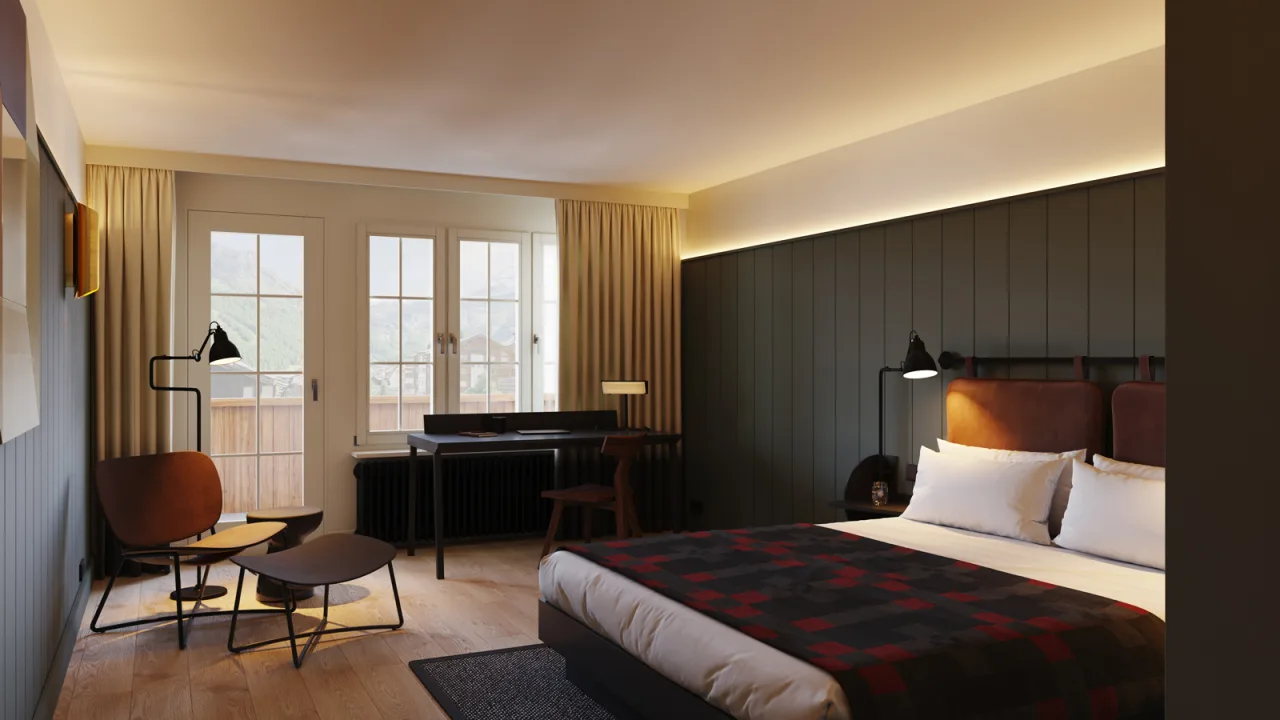
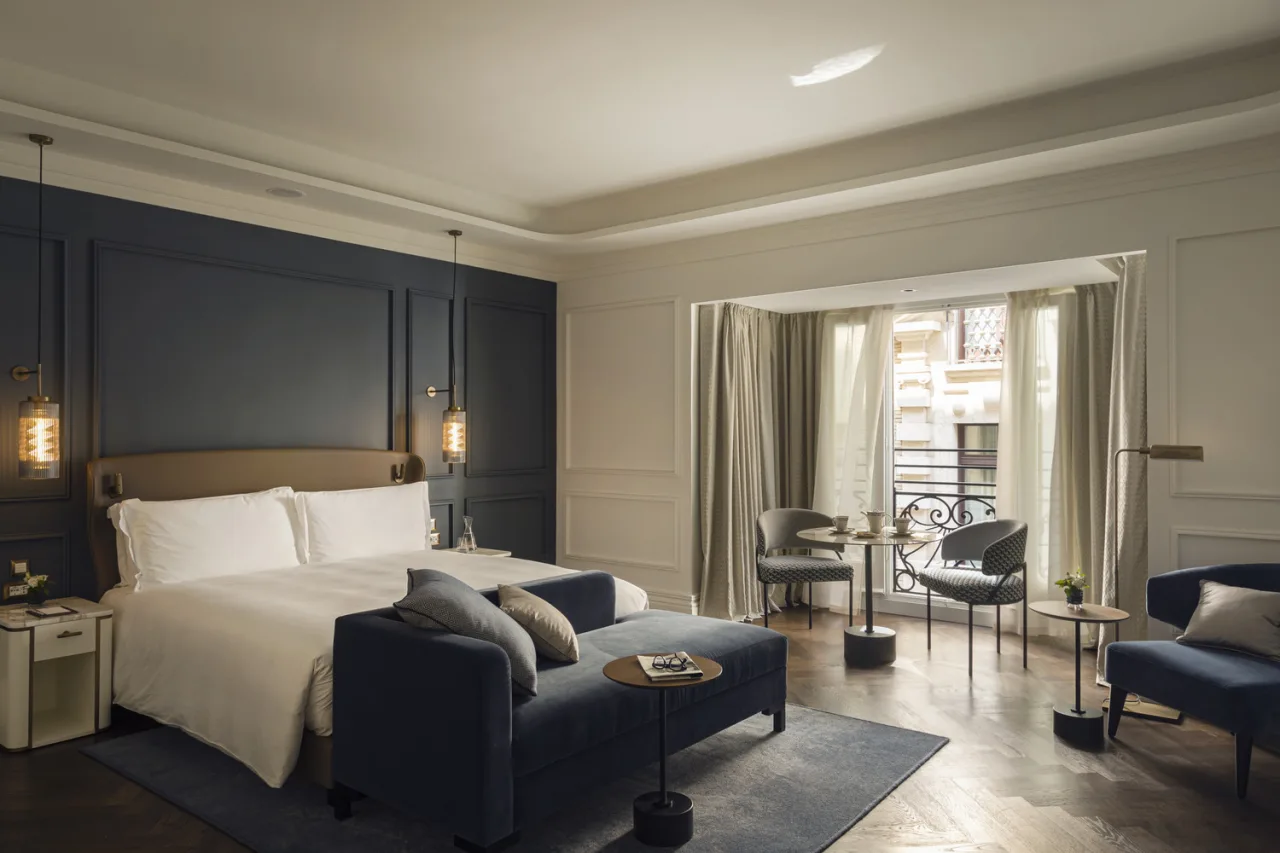
Here, the reference is not the Roman monument but the Roman residence. Two distinct room schemes layer timber floors, leather headboards, fluted lamps, and brass detailing with pieces developed specifically for the hotel and made by Italian artisans. Even the door hardware takes its geometry from the columns found throughout the city.

In the executive suites, arches divide sleeping and living spaces, bringing one of Rome’s most familiar architectural gestures down to the scale of a room.

The pleasure of the hotel lies in these changes of register: marble to timber, ceremony to privacy, the grandeur of the city to the quiet of a bedroom. The palace has not been returned to a particular moment in its history. It has been given another life.
Project Type

Hotel

Market

Hospitality

On Via Veneto, a former embassy returns to the business of receiving guests. Built in 1900, the neo-Renaissance Ambasciatori Palace carries the scale and ceremony of another Rome—columns, marble, ornamental plasterwork, and a staircase with more than a little drama. Its transformation into the InterContinental Rome keeps that history in view while making the experience warmer, more intimate, and decidedly of the present.
The Art of Arrival
The building knows how to make an arrival. Original columns and plasterwork set the stage, joined by marble, brass, gold-toned doors, and bespoke chandeliers. At the center, the historic staircase rises through the hotel, its eclectic detailing inspired by Rome’s opera house.

Rather than quieting that theatricality, the new interventions give it focus. Brass screens filter views. Red marble marks thresholds. Light draws the eye through the room and toward the stair, where white Marmorino brings the original ornament into relief and a deep red runner traces the ascent.

Old and new are easy to distinguish, but neither asks for the last word.
A More Intimate Rome
Away from the ceremony of arrival, the hotel becomes more private. The mezzanine moves into softer forms, wellness suites, and green Italian marble before the experience shifts again across 160 guestrooms and suites.

Here, the reference is not the Roman monument but the Roman residence. Two distinct room schemes layer timber floors, leather headboards, fluted lamps, and brass detailing with pieces developed specifically for the hotel and made by Italian artisans. Even the door hardware takes its geometry from the columns found throughout the city.

In the executive suites, arches divide sleeping and living spaces, bringing one of Rome’s most familiar architectural gestures down to the scale of a room.

The pleasure of the hotel lies in these changes of register: marble to timber, ceremony to privacy, the grandeur of the city to the quiet of a bedroom. The palace has not been returned to a particular moment in its history. It has been given another life.

Have a project in mind?
Let's Talk

Start an Inquiry

Get in Touch
We care about protecting your data


We care about protecting your data
How we use your data

On this website we use cookies and similar technologies to process device information and (anonymised) personal data. Processing serves the integration of content, external services and third-party elements, statistical analysis/measurement, integration of social media and IT security. Depending on the function, data is passed on to and processed by third parties. When integrating social media and interactive elements, data may also be stored by providers outside the jurisdiction of the European Union; despite careful selection, a level of protection equivalent to European data protection standards cannot be guaranteed. All consents are voluntary, not required for the use of our website and can be revoked or individually adjusted at any time via the "Adjust privacy settings" link in the footer.