Welcome to The Boulevard
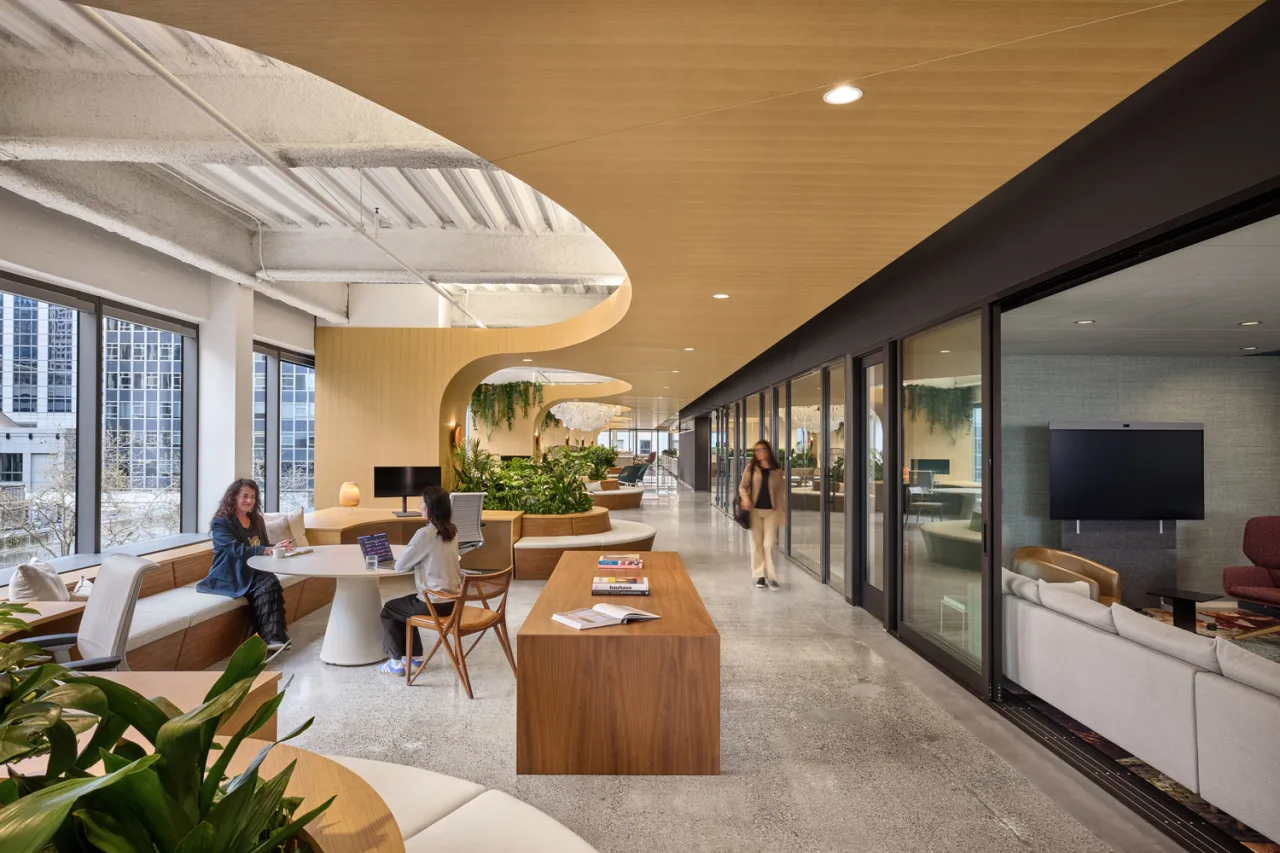
Designed through the lens of collective consciousness, IA’s new Seattle studio, dubbed "The Boulevard," spans the north side of the city’s 4th and 5th Avenues. Inspired by the activity on those dynamic, tree-lined streets, the design celebrates the workspace as a place of connection, where people, ideas, and experiences intersect.
Collective consciousness is typically defined as the ideas, beliefs, and feelings shared by people in society that help unite them. From that perspective, the influence of every decision we make goes far beyond our personal sphere. For a business, that concept has real implications. The way we design a workplace influences how people feel, work, and connect with one another, how the organization attracts and retains talent, and ultimately how effectively the business can adapt and perform.
In our new workplace, design is a catalyst for creating value across three interconnected dimensions:
Wellbeing—supporting the health, comfort, engagement, and experience of every individual
World—making responsible choices that positively impact our environment, communities, and broader ecosystem
Worth—creating lasting value for the organization through innovation, flexibility, resilience, and thoughtful investment
But these are not three separate priorities; they are part of a whole and reinforce one another. When people are supported, organizations perform better. When resources are used responsibly, organizations become more resilient. And when we design for adaptability and long-term value, today's investment continues to pay dividends well into the future. Moving through The Boulevard, you’ll see how every design decision contributes to one, often all three, of these principles.
World + Worth: Sustainability & Circular Economy
One of the clearest expressions of collective consciousness is the commitment to designing beyond today.
By reusing more than 85% of our existing furniture, we diverted 25,000 pounds of waste from landfills. Countertops are made from locally sourced paper and resin, casework is painted to minimize the use of plastic, and even the cabinet hardware is second-hand from a local salvage shop.
These choices aren't simply about reducing environmental impact. They demonstrate that sustainability can be a business strategy. Reusing what we already own reduces waste, extends the useful life of existing assets, and allows resources to be redirected toward experiences that create greater value for employees and the organization.
Our Resource Library team took this thinking a step further and developed a system for tagging library content into “good, better, best” categories. This gives designers an easy way to evaluate selections through an environmental lens while making more informed decisions about where investment creates the greatest value.
Throughout the project, we selected low-impact, recycled, and certified materials while embracing circular economy principles that minimize waste, maximize existing resources, and increase the longevity and adaptability of our investments.
A signature example is the world's largest installation of 3D-printed casework. Rather than traditional millwork, this installation is manufactured from bio-resin created from reclaimed agricultural waste, including corn and wood pulp.
This innovative material:
Produces approximately 80% fewer greenhouse gas emissions
Uses 52% less non-renewable energy
Can be ground up and reprinted into entirely new products without degrading
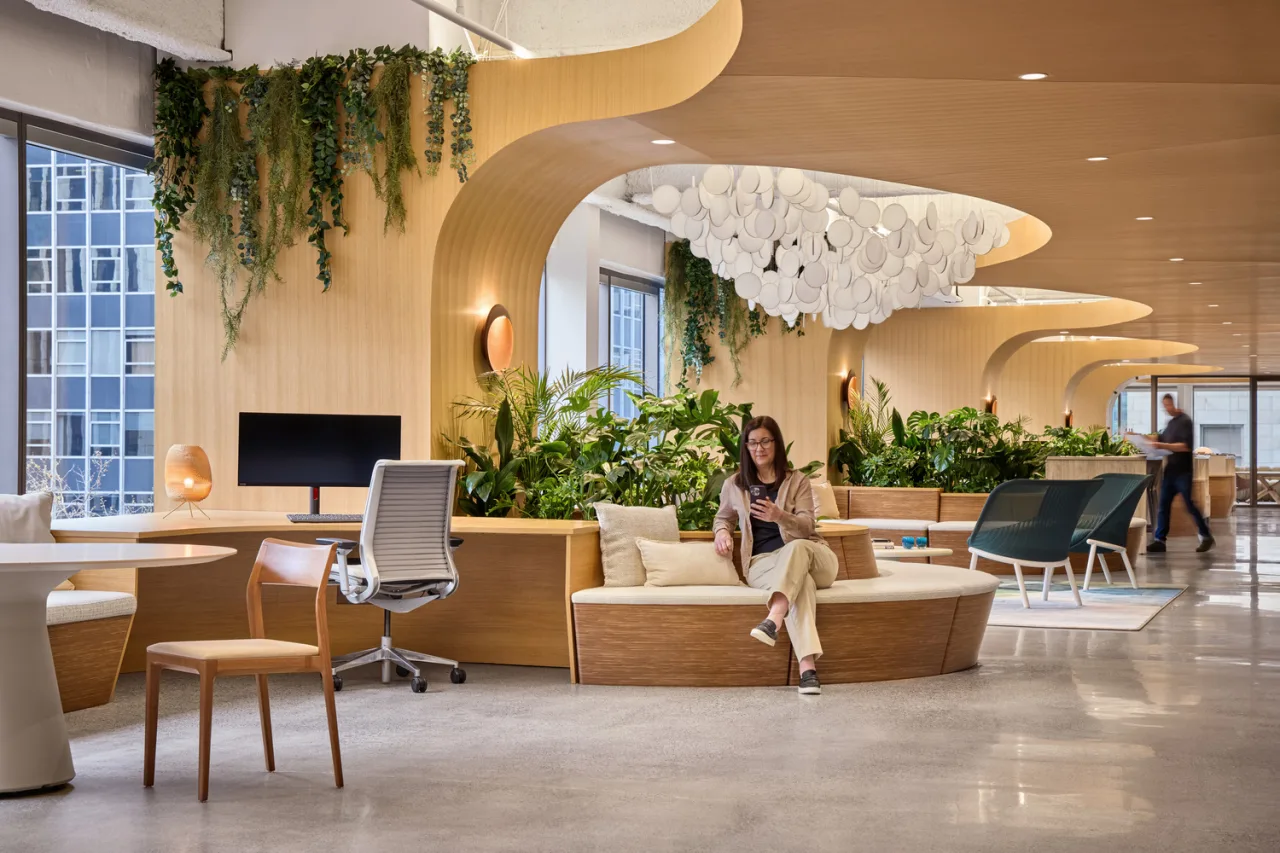
But the story isn’t only environmental. The ability to reuse, reconfigure, and ultimately remake materials represents a different way of thinking about capital investment—creating organizational value through flexibility, adaptability, resource efficiency, innovation, and long-term resilience. The business case for circularity is ultimately the same as the business case for agility: don’t build an organization or a workplace that becomes obsolete when circumstances change.
World: Social Impact Through Design
Collective consciousness also means recognizing the people behind the products we specify. Throughout the space, we intentionally partnered with small businesses, women- and minority–owned businesses, and independent designers from around the world.
Highlights include:
3D-printed lounge chairs designed for easy disassembly and recyclability
Furniture manufactured from 100% recycled polymer waste
Plaster walls in the Wellness Room, hand applied by a woman-owned New York studio
A statement lounge chair designed and manufactured in Ukraine
A handcrafted bronze door handle at the entry created by a family-owned company
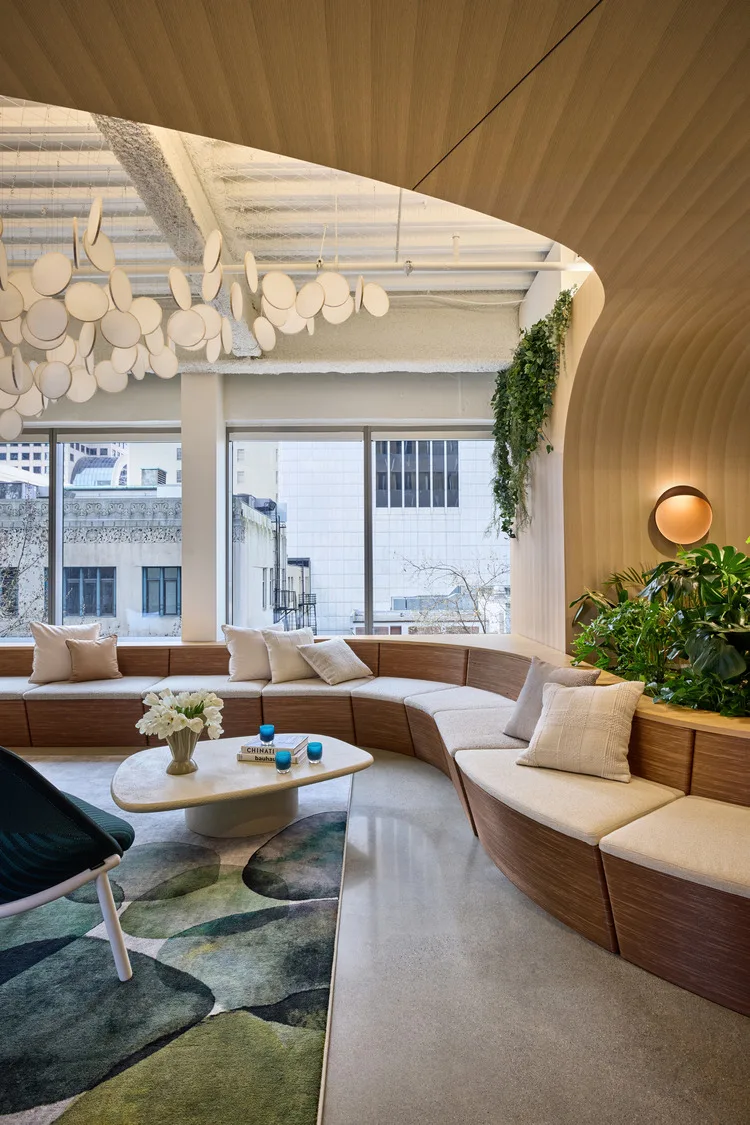
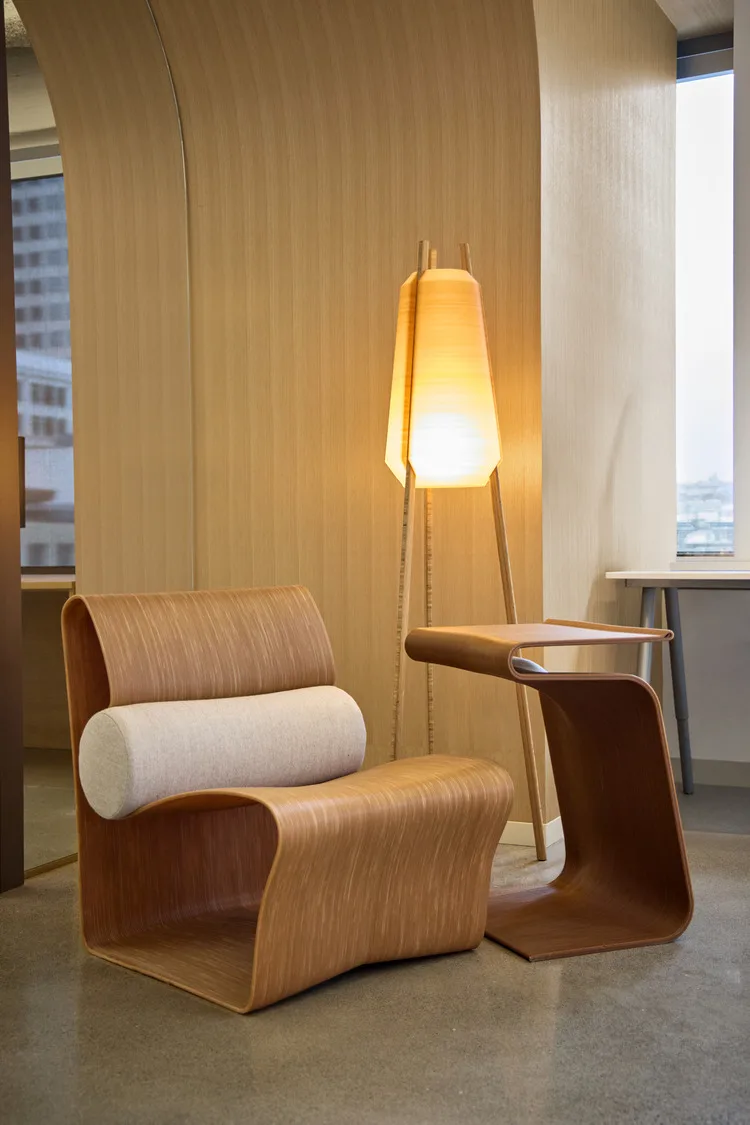
These choices demonstrate that procurement can do more than acquire products. It can build relationships, support entrepreneurship, strengthen communities, and reinforce the values an organization wants to embody.
There is also a business benefit to this approach. A workplace is a highly visible expression of organizational culture. The companies and designers we choose to work with become part of our story—and that story matters to employees, clients, candidates, and partners.
The workplace is increasingly a brand touchpoint. When the physical environment authentically reflects an organization's values, it can strengthen connection, differentiation, and trust. In this way, social impact isn’t separate from organizational value. The relationships we build through our purchasing decisions become part of our culture and the reputation we build as a company.
Well-being: Designing for Each Individual
Collective consciousness acknowledges that there is no single way to work well. Rather than designing for one type of employee, The Boulevard supports a diversity of work styles, personalities, needs, and individual preferences. Employees can:
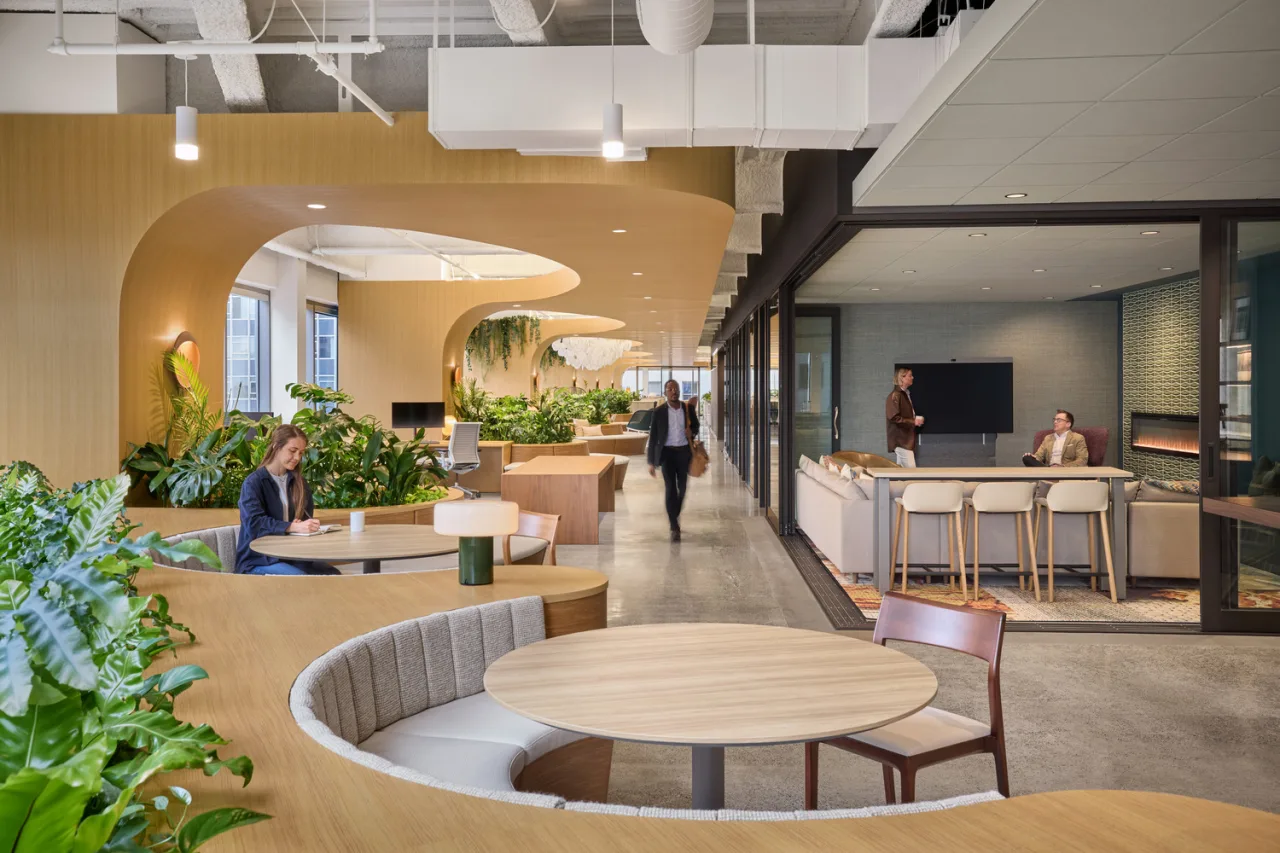
Select a dedicated workstation or work where they choose throughout the day
Select environments that best support focus, collaboration, restoration, or social connection
Experience a wide range of furniture designed for sitting, standing, rocking, swiveling, or lounging
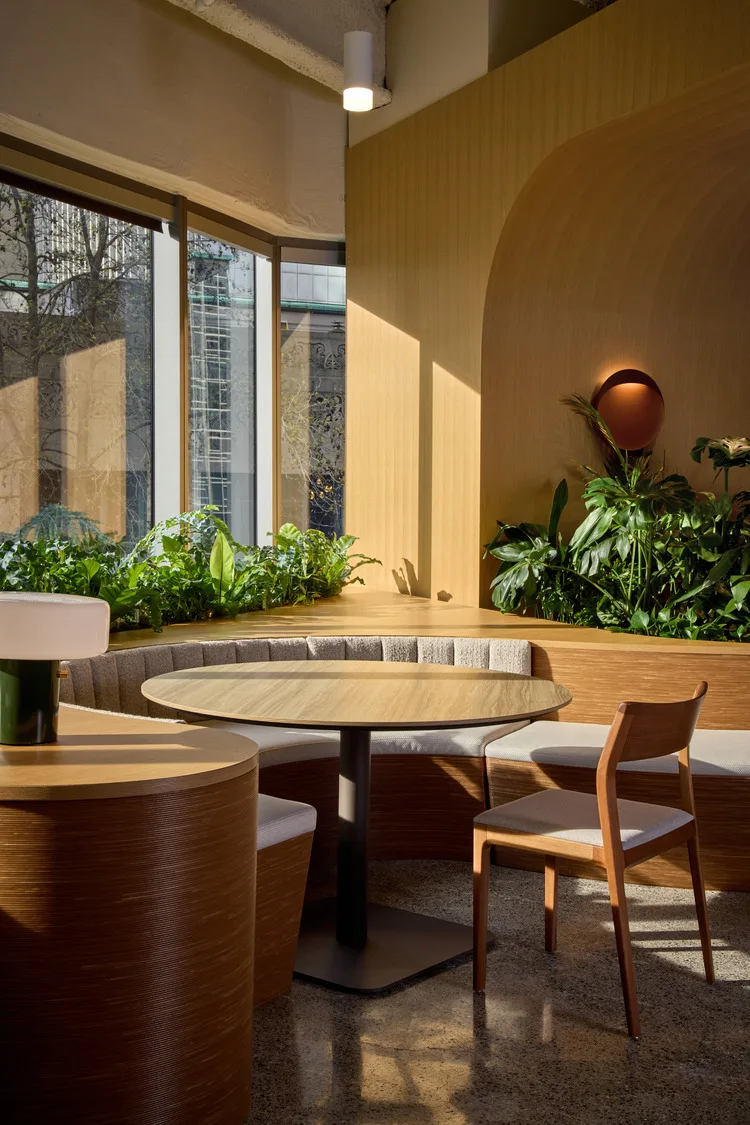
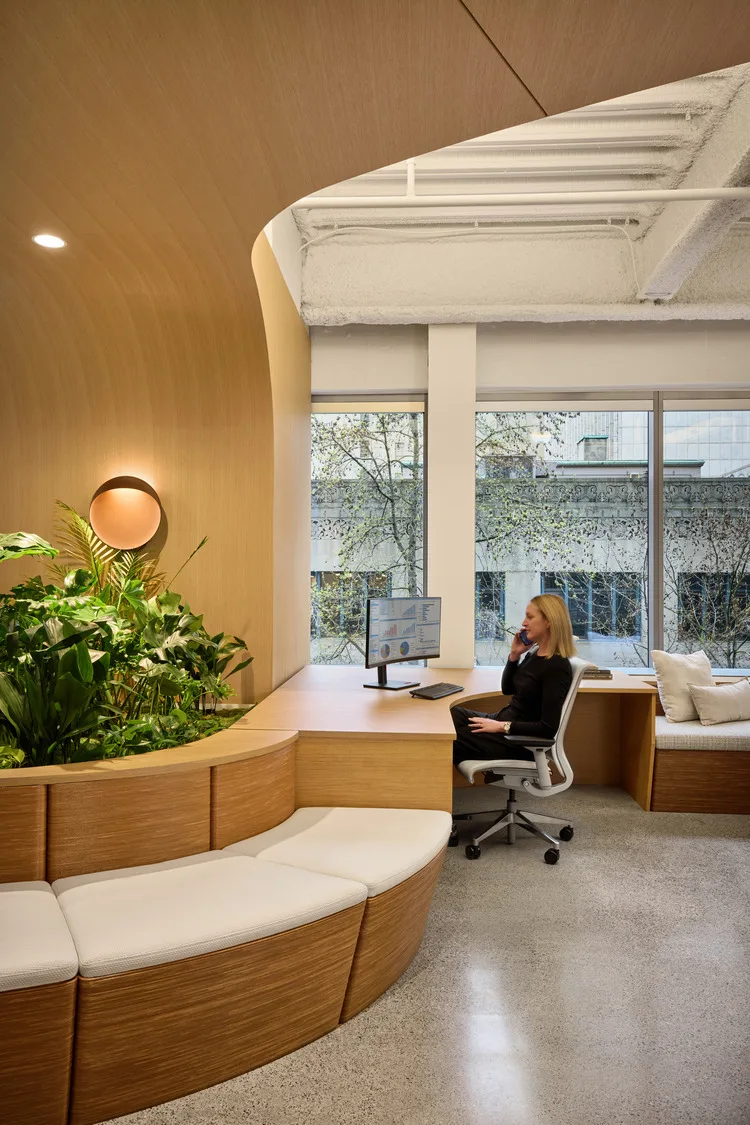
This level of choice is intentional.
When people have greater control over how and where they work, the work environment better supports the different activities that make up a productive day. The Boulevard provides a portfolio of choices. That flexibility has organizational value. A workplace that accommodates different ways of working can support employee experience, engagement, collaboration, and the ability to attract and retain a diverse workforce.
It also makes the real estate investment more resilient. Instead of assigning every square foot to one specific function, we're creating environments that support multiple uses and changing needs over time. The result is a workplace that adapts to people—and an organization that can adapt more readily to change.
Well-being + World: Human-Centered Biophilic Design
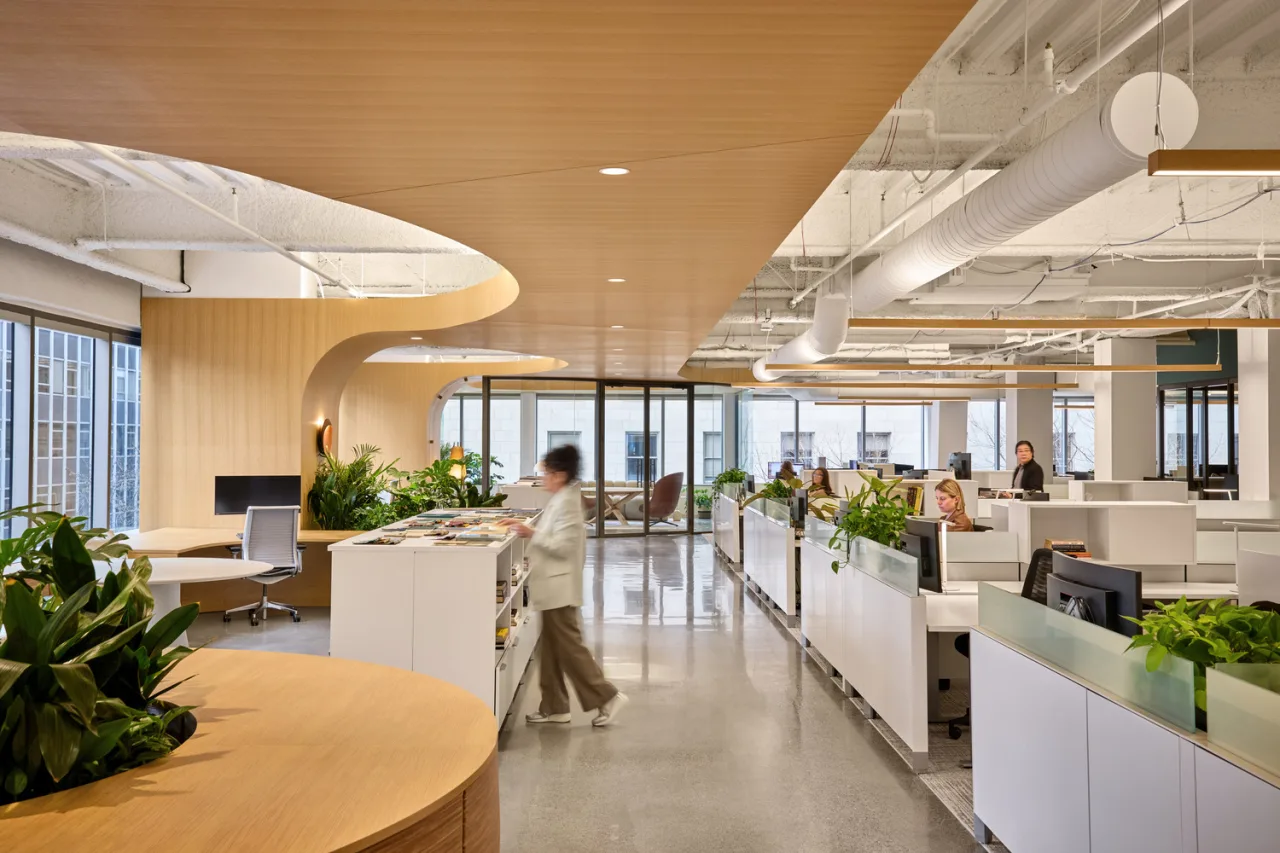
Nature is woven throughout The Boulevard because our relationship with the natural world is fundamental to human well-being.
Drawing from Terrapin Bright Green's 15 Patterns of Biophilic Design, one notices:
Expansive views that create visual connections with nature
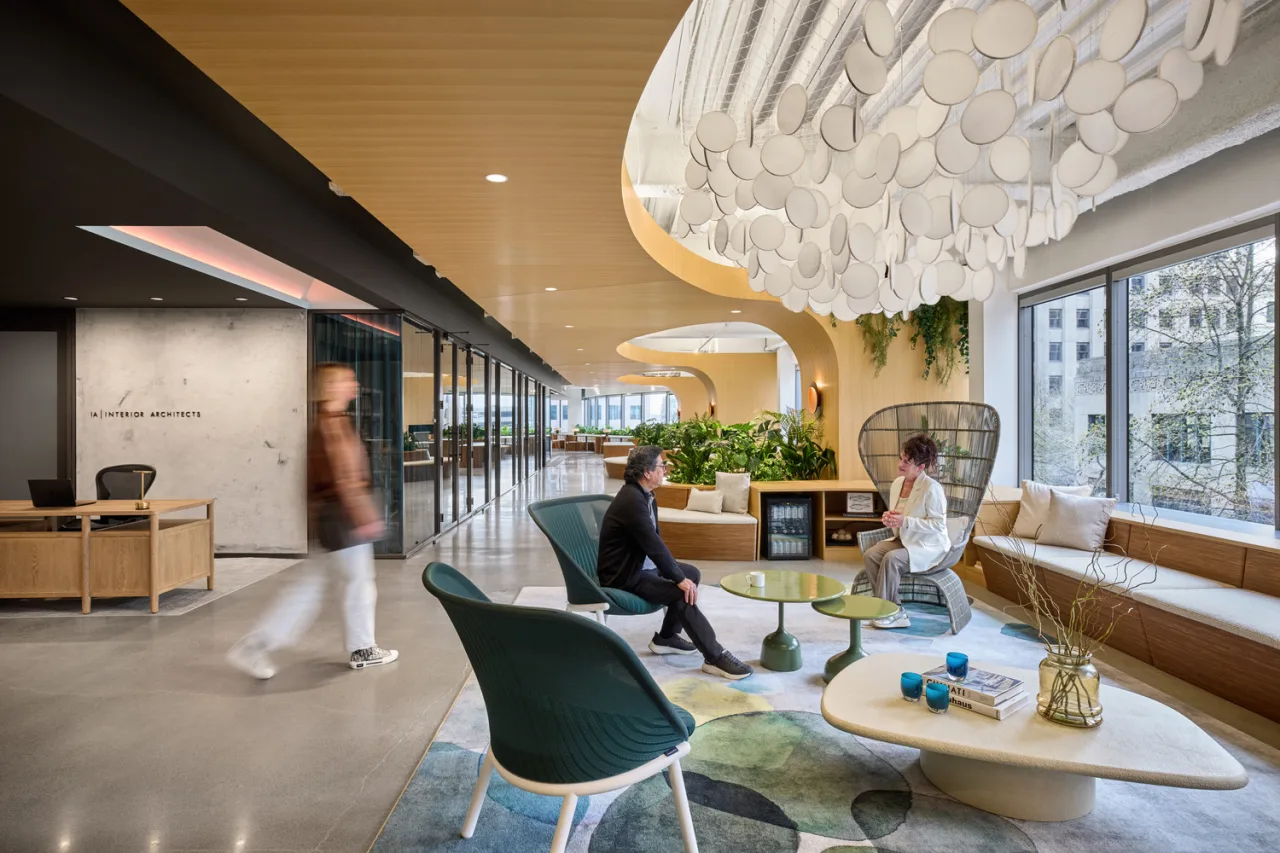
Living plants integrated throughout the workplace
A reception ceiling sculpture created by employees that introduces moments of surprise, strengthening culture and shared ownership
A fireplace that adds warmth, comfort, and multisensory experience
Tree-inspired columns and ceiling forms evoking a forest canopy
Thin wood wall coverings that reduce material use while maintaining an authentic connection to natural materials
Extended sightlines across the workplace to create a sense of prospect. Small eddies tucked along the circulation path provide refuge for focused work, quiet reflection, and intimate conversations.
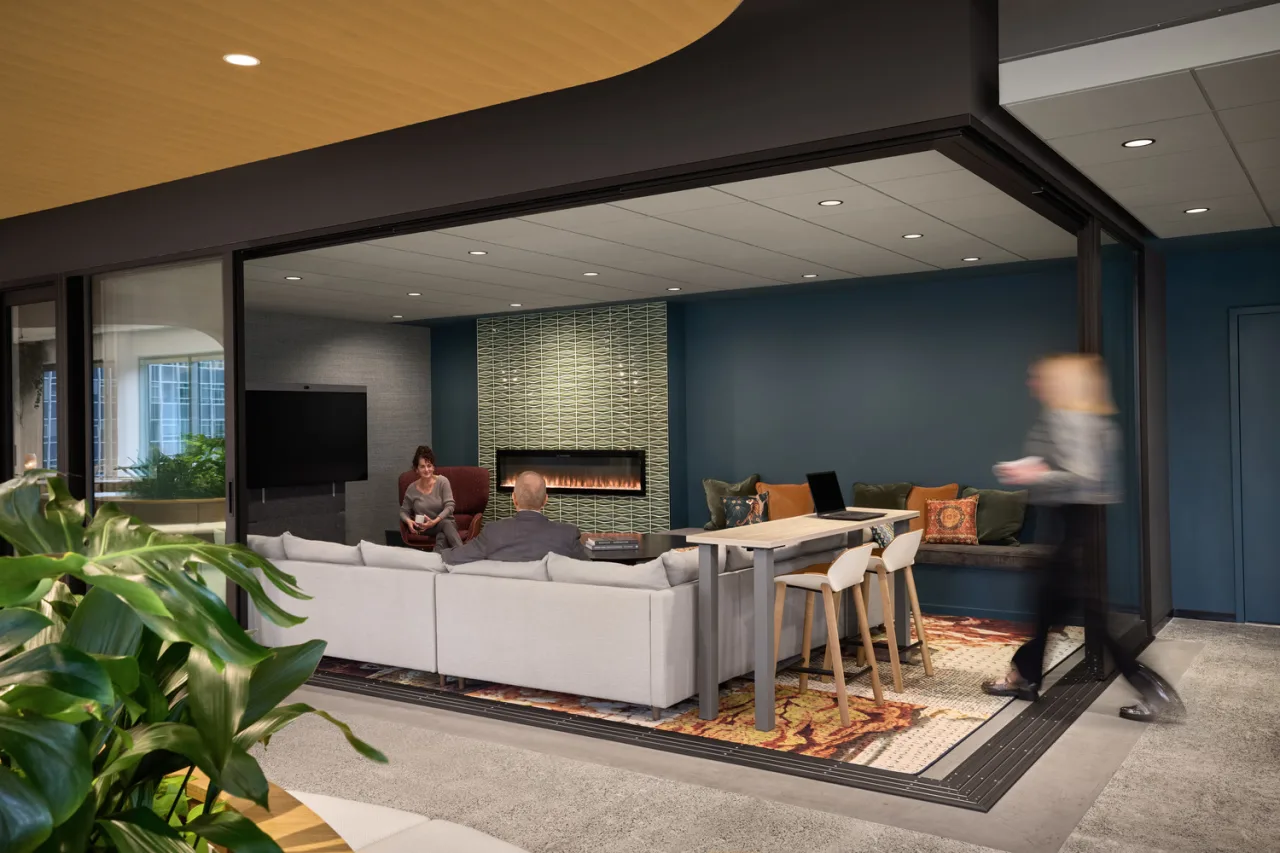
These moments remind us that well-being is created not only through amenities but through environments that instinctively feel comfortable, restorative, stimulating, and human.
And there is good reason to care about these experiences. People do not experience a workplace as a collection of furniture, walls, and finishes. They experience it as an environment that either supports or hinders their ability to focus, connect, recharge, create, and contribute.
When the workplace is designed around human experiences, it becomes an active tool for supporting the organization’s most important asset: its people. Even the employee-created ceiling sculpture demonstrates this principle. It transforms the workplace from something delivered to employees into something created with them—building a sense of participation, ownership, and belonging.
The Boulevard as a Business Ecosystem
When we step back, the individual decisions throughout The Boulevard begin to reveal a larger strategy.
Well-being supports the people who make the organization successful.
World recognition acknowledges the organization as operating within a larger environmental and social ecosystem.
Worth inspires us to ensure every investment creates value not only today but over time.
Together, these principles create a more holistic approach to workplace design and the workplace becomes a platform for:
Attracting and retaining talent by creating an environment people want to be part of
Supporting productivity and performance by providing environments suited to different modes of work
Strengthening culture and connection by creating opportunities for interaction, ownership, and shared experiences
Expressing the brand through an environment that makes organizational values tangible
Reducing waste and resource consumption through reuse and circular design
Increasing adaptability by creating spaces and systems that can evolve with changing needs
Building resilience by making thoughtful decisions about resources, materials, partnerships, and long-term investment
Creating differentiation through innovation and a workplace experience that cannot be replicated through a generic solution.
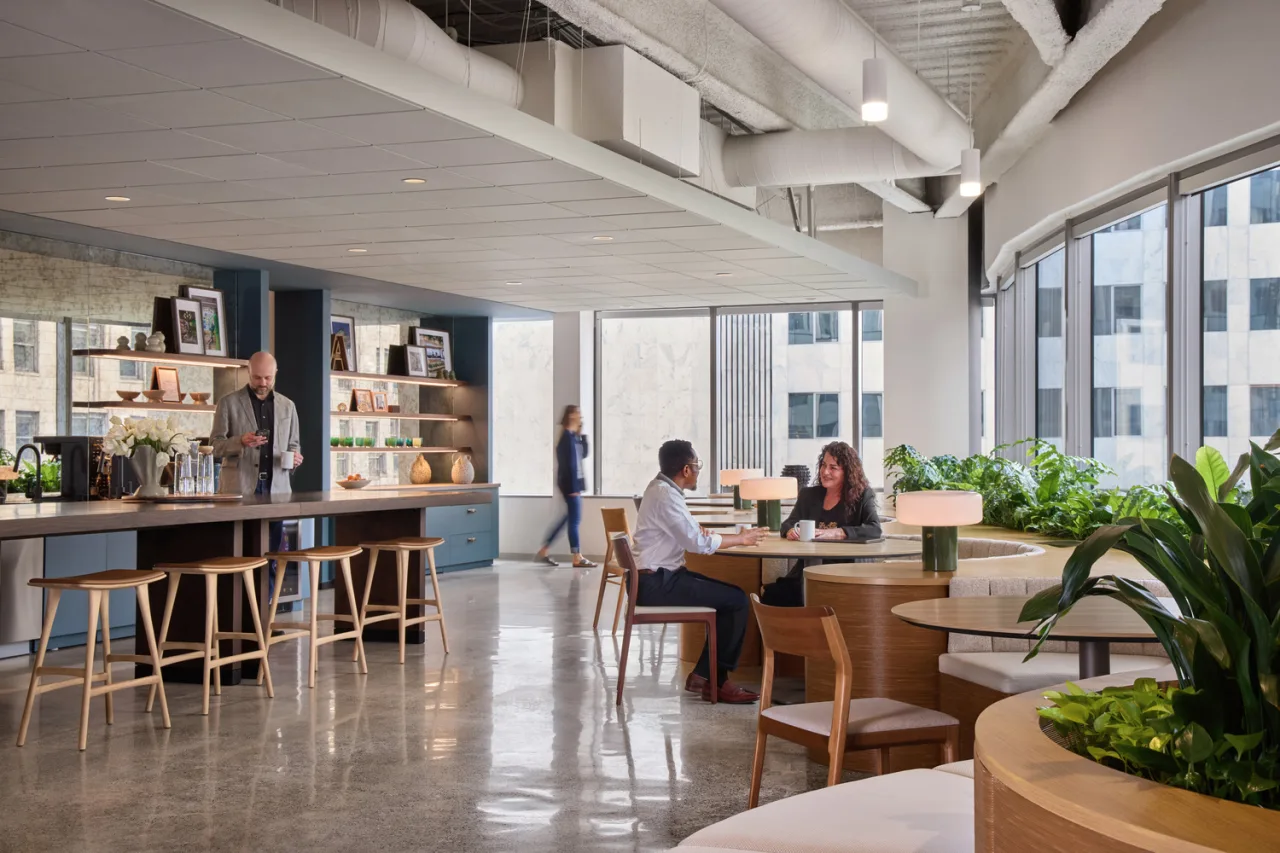
The outcome offers more than a single return on investment. It offers the cumulative value created when the physical workplace supports people, purpose, performance, and the planet at the same time.
Conclusion
The Boulevard is an expression of collective consciousness in action. Every material, partnership, planning decision, and design gesture was evaluated through the lens of Well-being, World, and Worth.
Rather than treating these three priorities separately, they became an interconnected system—where supporting people strengthens organizations, caring for the world builds resilience, and thoughtful investment creates lasting value.
The result is more than a workplace. It is an environment designed to help people do their best work, bolster relationships and culture, manifest what the organization values, and ensure responsible decisions about the resources entrusted to us.
Ultimately, The Boulevard demonstrates that good design and good business are not competing ideas. When we design with a collective consciousness, the elements and factors that are good for people can also be good for the organization and good for the world, ensuring business resilience and lasting worth that creates value for everyone who experiences the space. When the workplace becomes a living ecosystem, every square foot has the potential to create value.
Have a project in mind?
Let's Talk
Start an Inquiry
Get in Touch