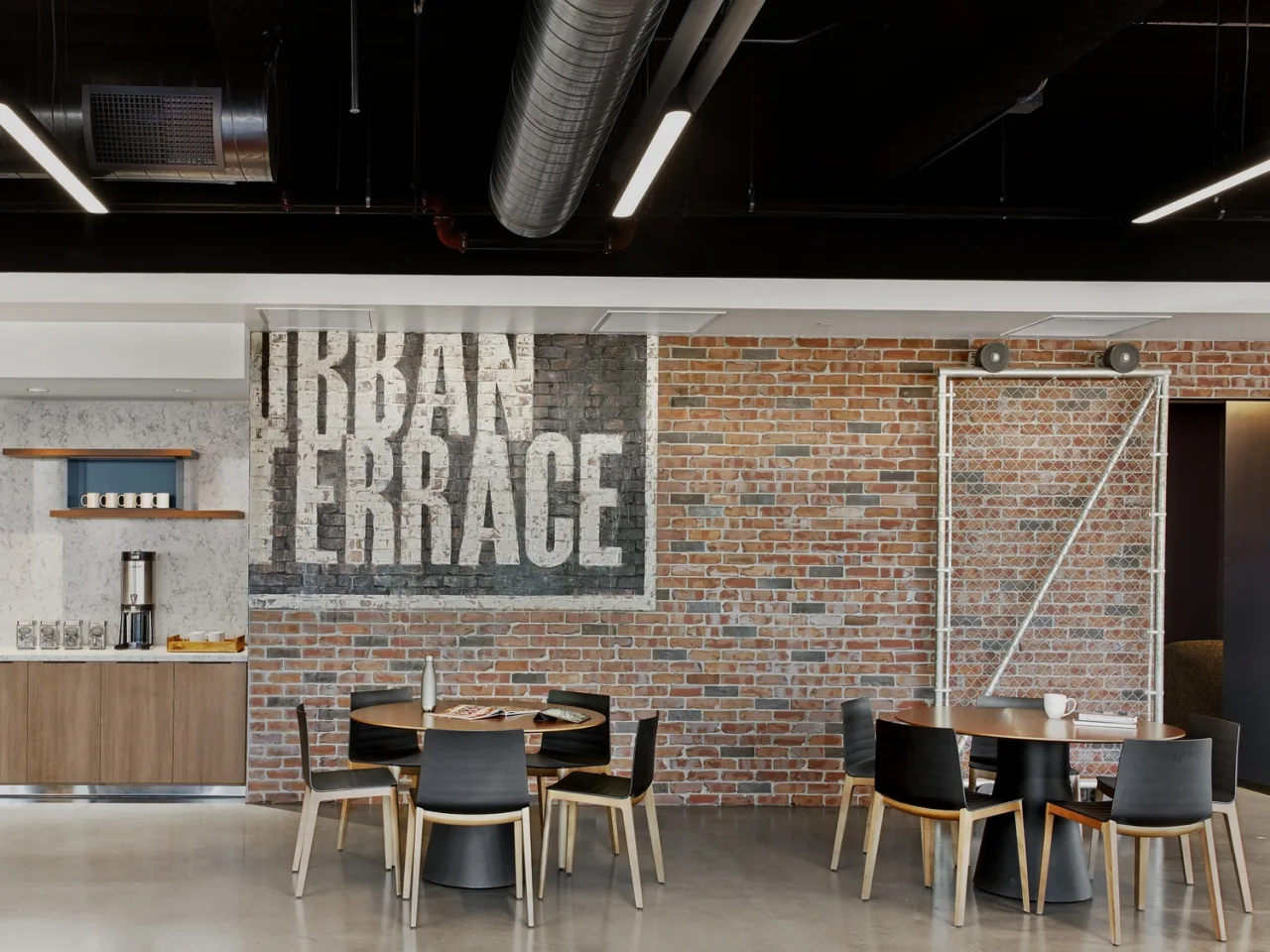
Signage: More Than Meets the Eye
Julie Maggos
Senior Director, Experiential Design
SEGD, LEED AP
Signage does far more than identify a room or point people in the right direction. When considered from the beginning, it becomes part of the architecture of an experience, supporting navigation, reinforcing identity, expressing culture, and helping people move through an environment with confidence.
Integration Matters
Signage is shaped by a range of local, federal, and industry-specific requirements, and addressing those requirements late in a project can add time, cost, and complexity. By bringing signage into the design process early, teams can coordinate code compliance alongside planning, circulation, brand expression, and the broader human experience.
At its most fundamental level, certain categories of signage must meet code. Requirements vary by jurisdiction, but workplace signage for permanent rooms must comply with accessibility standards, including provisions for braille, raised lettering, and placement. Other categories, such as some building directories and menus, may be exempt. Understanding where regulations apply and how they intersect is an essential part of the design process.
But compliance is only the starting point.
People, Place, and Brand
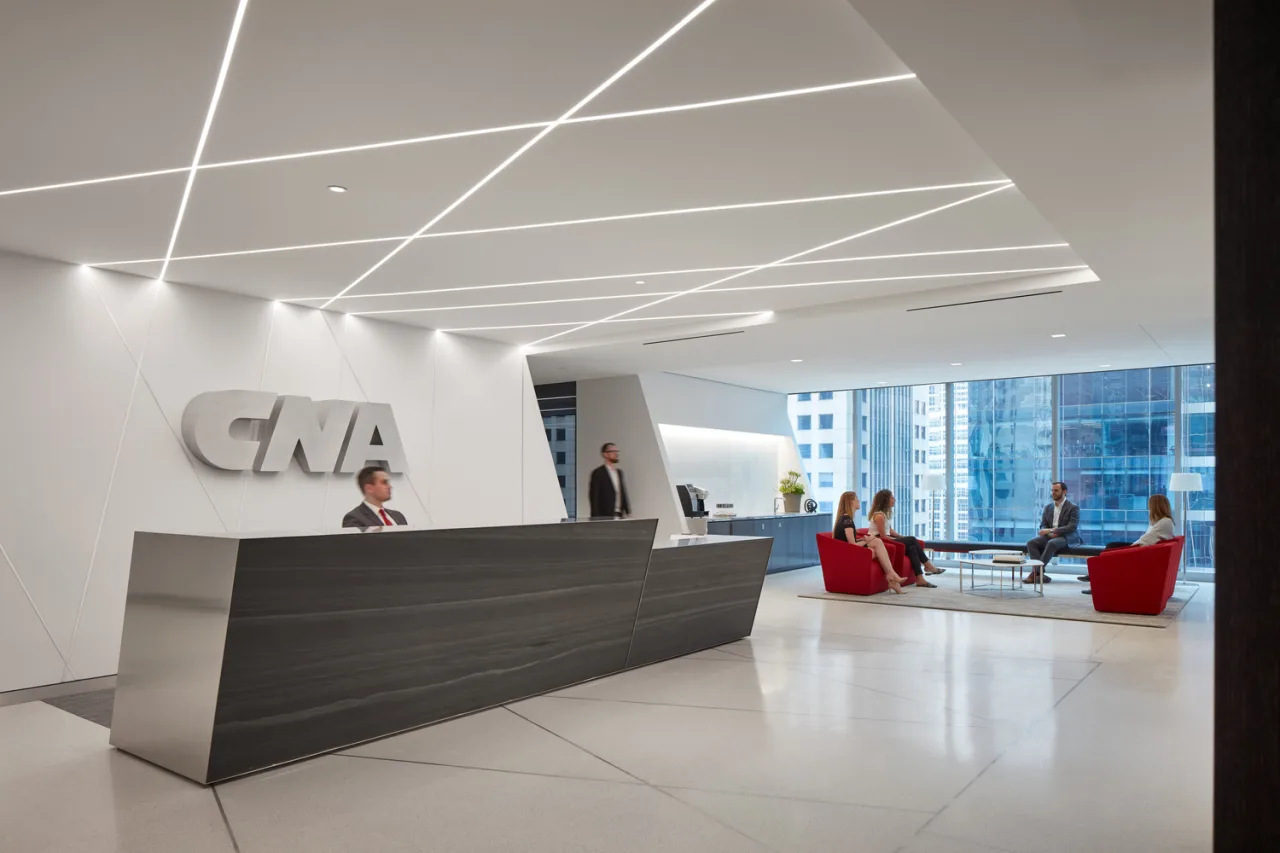
When signage is integrated into a larger architectural and experiential strategy, it can strengthen the connection between people, place, and brand. At CNA’s Chicago headquarters, for example, IA translated the 70-degree angle of the CNA logo into a recurring design language. The geometry moves through lighting, textiles, architectural elements, and signage for huddle rooms, conference rooms, and private offices. Rather than functioning as a separate graphic layer, signage becomes part of a cohesive environment that expresses the organization’s identity.
Sense of Place
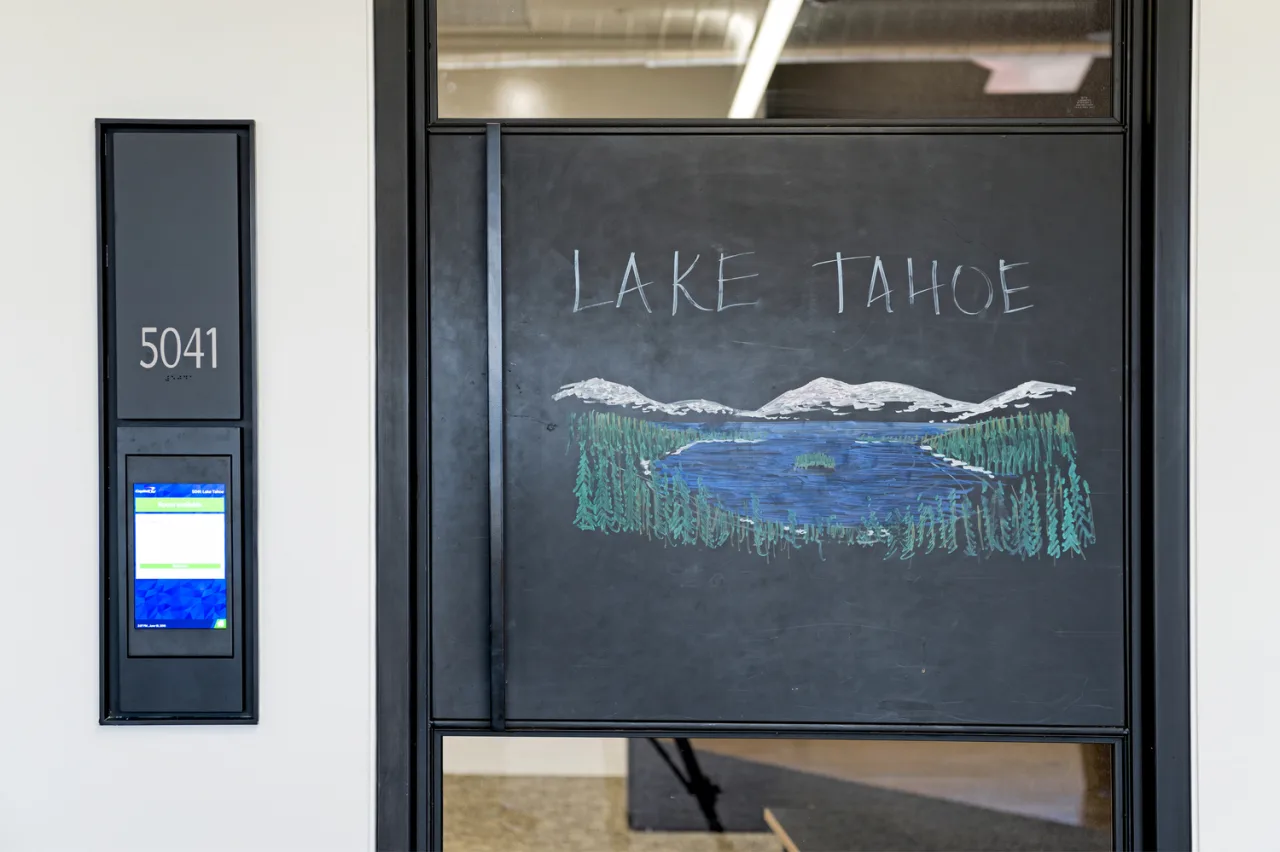
Signage can also connect an environment to its context. For a LinkedIn's San Francisco vertical campus, graphics inspired by the Sierra Nevada Mountains reinforce a sense of place while contributing to the character of the workplace.
Clarity at Scale
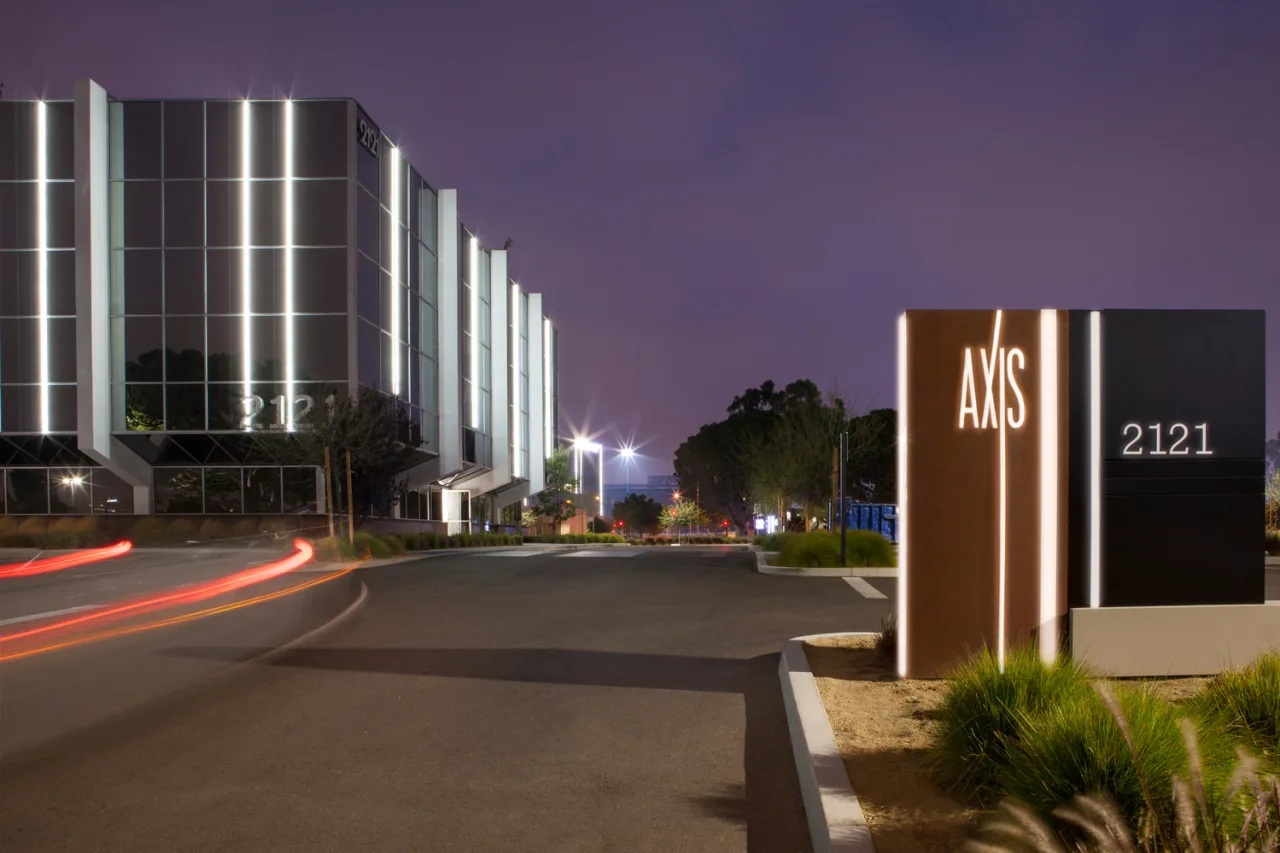
At the scale of a building or campus, signage can help establish arrival, clarify circulation, and strengthen the identity of a destination. For ACP in Anaheim, exterior signage does more than mark a location; it contributes to how the property is recognized and experienced.
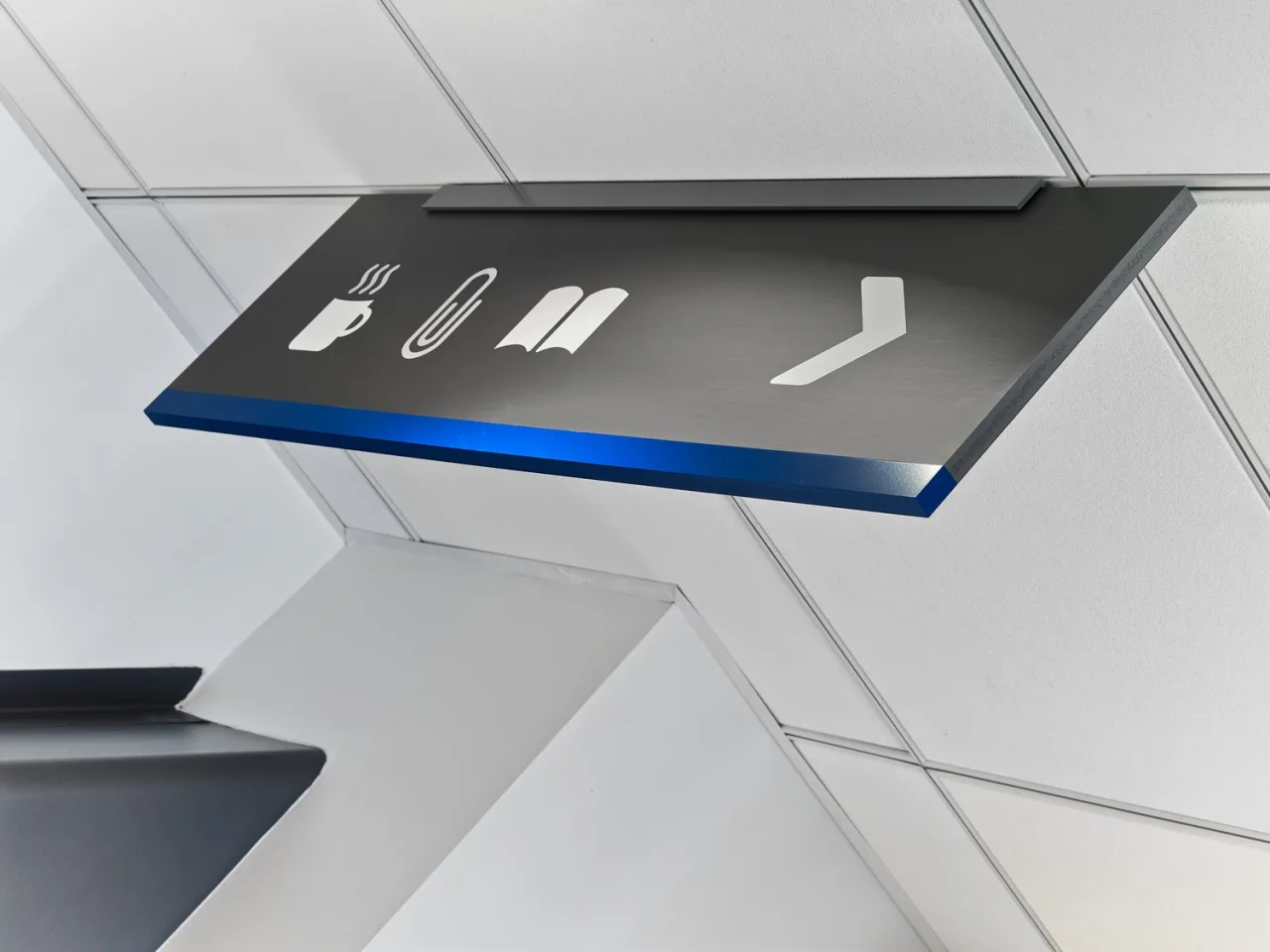

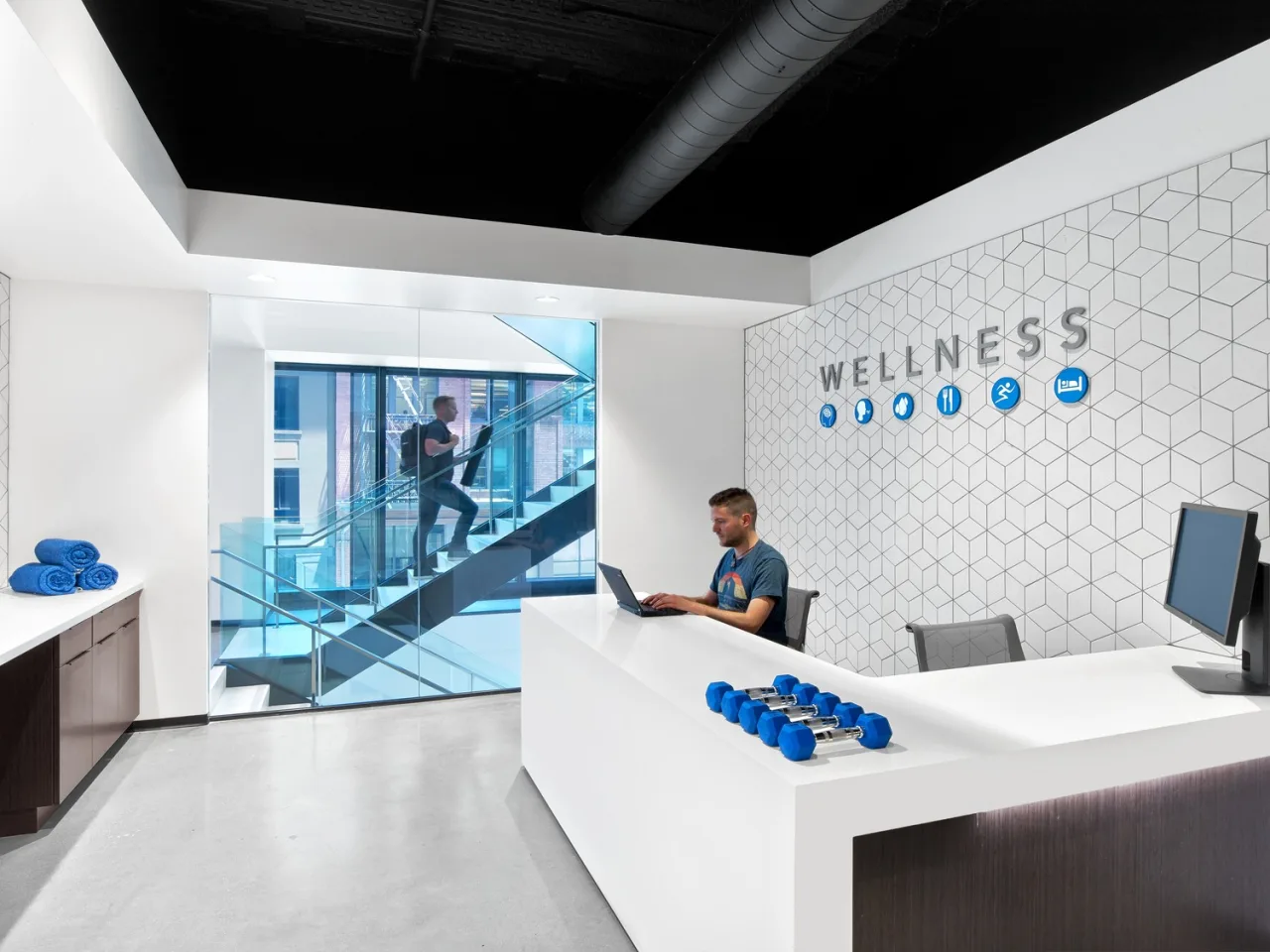
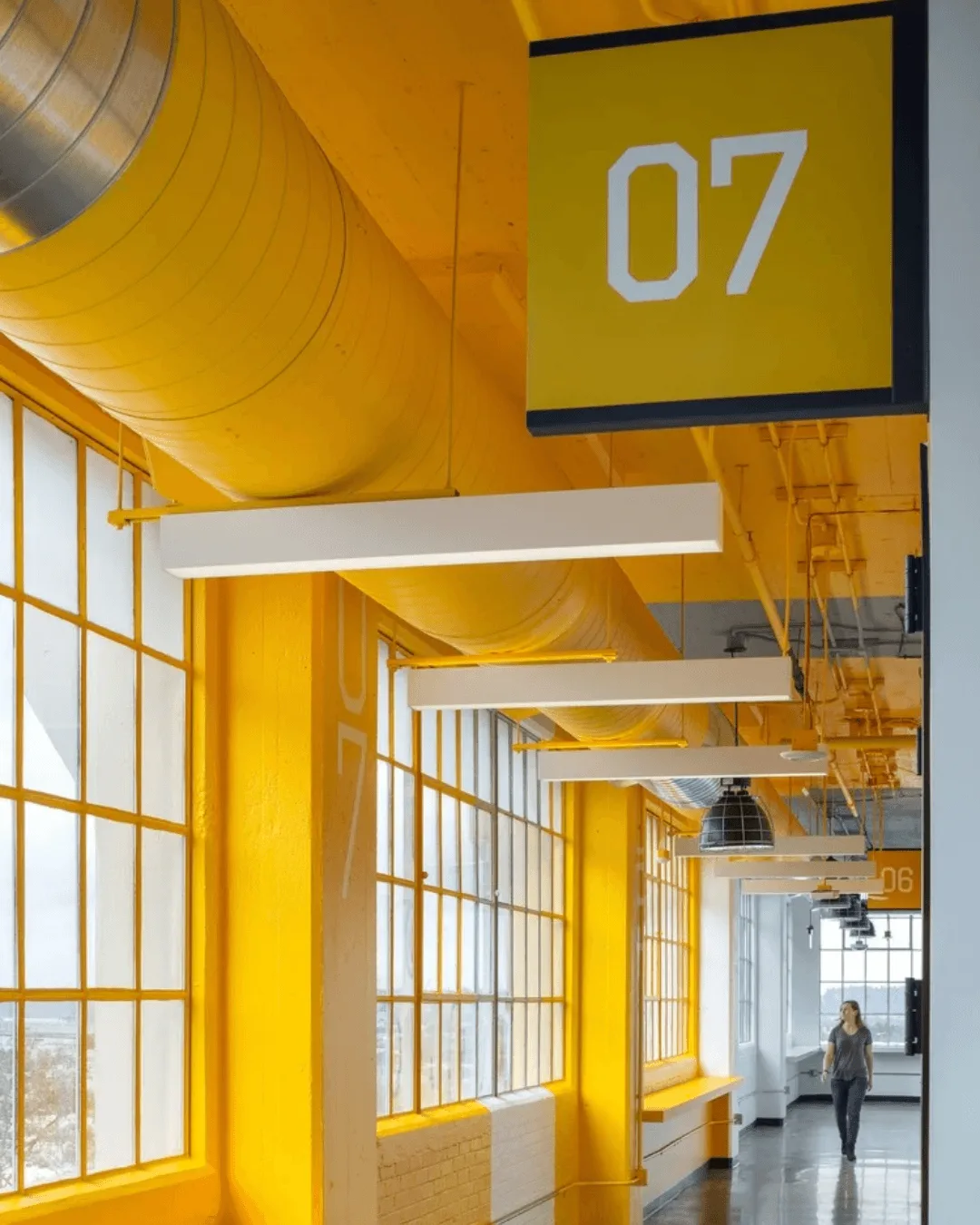
Signage can call attention to place, guide movement, or identify destinations in ways that range from quiet and functional to expressive and memorable. The opportunity lies in understanding what each moment needs to do, and designing it as part of the whole.
Because signage is encountered every day, it has an outsized influence on how easily people understand and navigate an environment. The most effective solutions balance clarity, accessibility, identity, and experience from the outset.
When signage is treated as an integrated design element rather than a finishing touch, it can do more than direct. It can orient people, communicate culture, strengthen brand expression, and create a more intuitive experience of place.

Have a project in mind?
Let's Talk
Start an Inquiry
Get in Touch