Invisible Technology
Julie Maggos
Senior Director, Experiential Design
SEGD, LEED AP
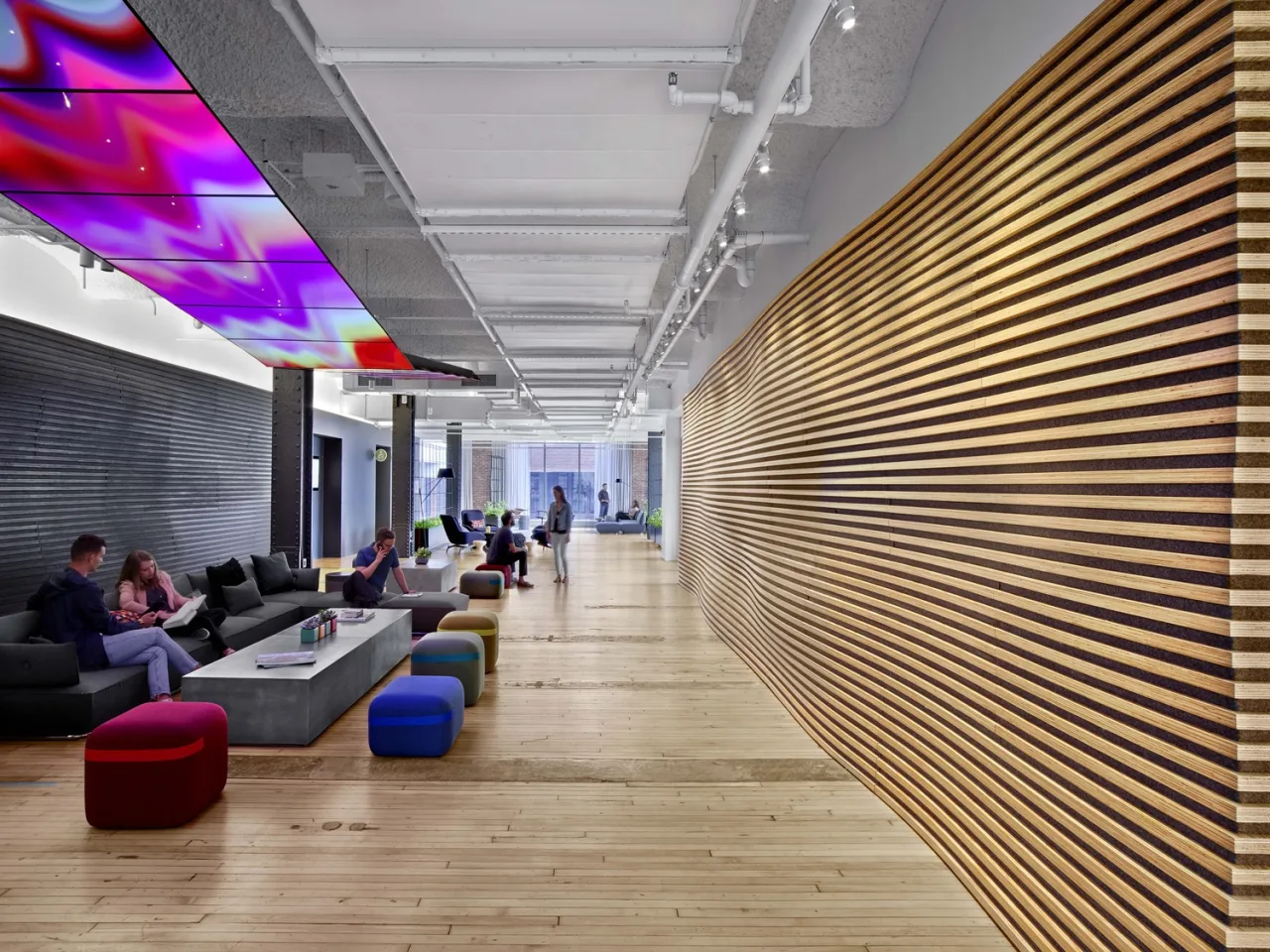
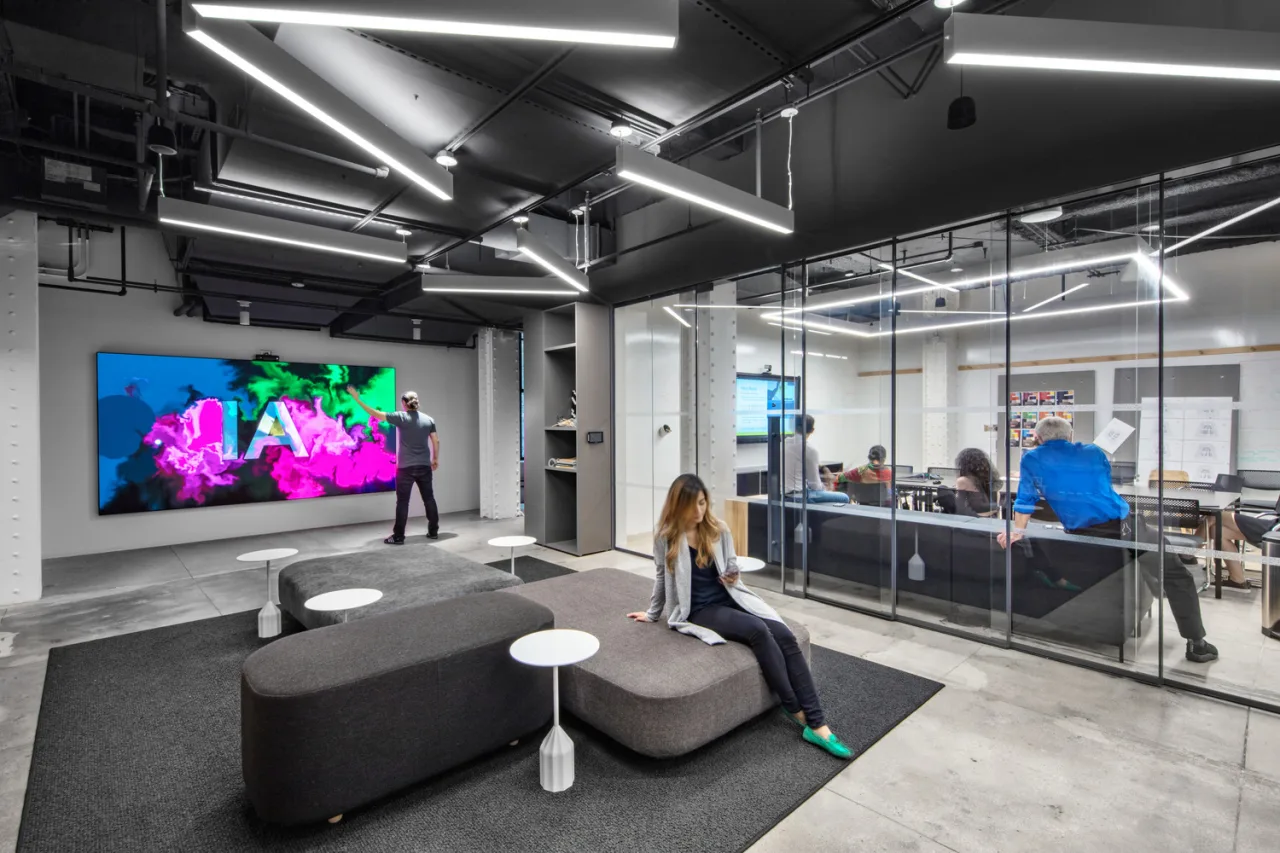
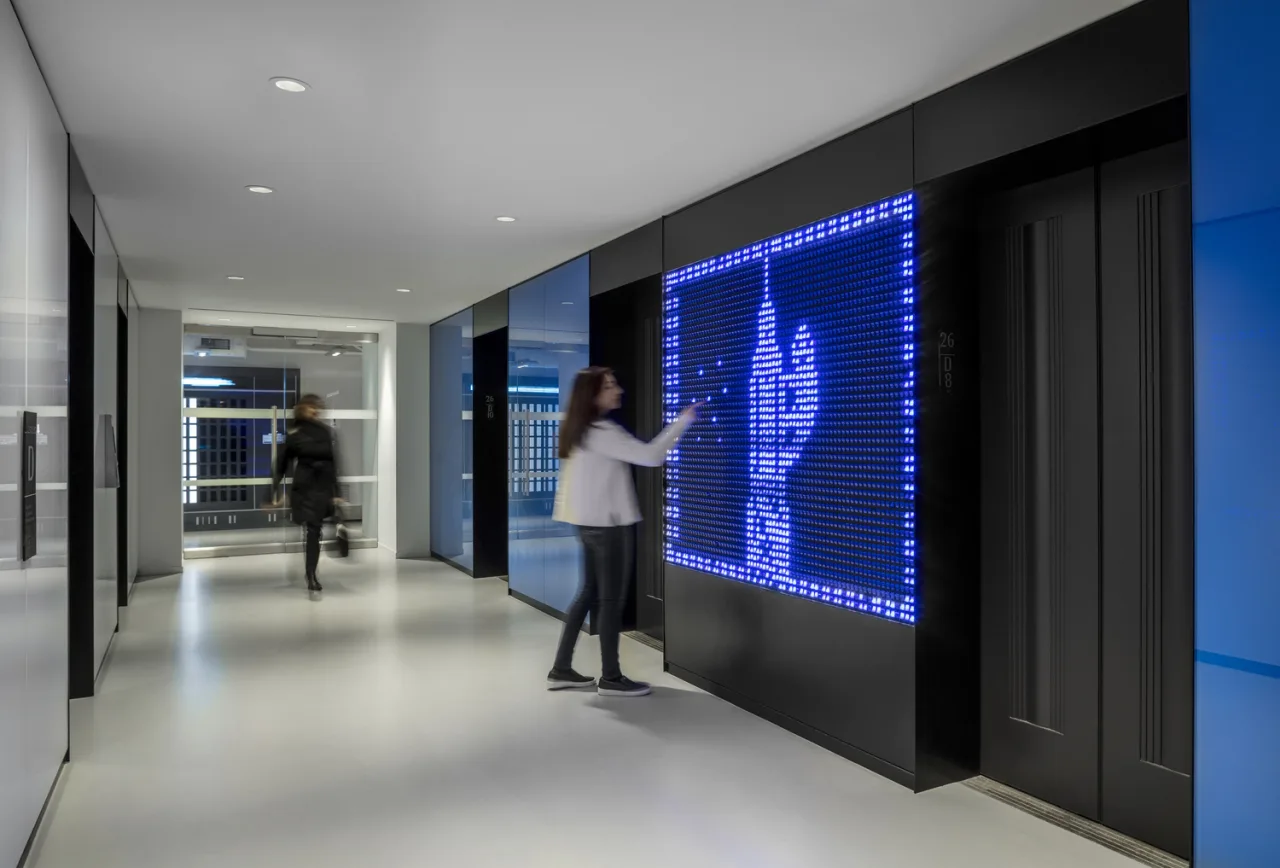
Activating the reception area of IA’s Manhattan office, on the 12th floor of a landmark 1890s skyscraper, is a wall-mounted LED screen displaying a mesmerizing simulation of real-time colorful fluids that respond to movement by swirling and morphing similar to a lava lamp. It’s a whimsical (and hypnotizing) counterpoint to the otherwise neutral, industrial-inflected palette and one of many design elements that invite staff and visitors to interact with their surroundings.
Technology That Tells a Story
The screen wall is one example of how IA uses creative technology to make an environment more responsive and engaging. By combining digital content, interaction, and spatial design, these installations can help tell a story, reflect activity, and create a stronger connection between people and place.
Technology is already embedded in the contemporary workplace, from mobile devices and cloud-based platforms to occupancy sensors and environmental controls. These tools help people work more efficiently, but technology can also play a more experiential role. Used thoughtfully, it can create moments of discovery, spark joy, and strengthen the connection between people and their surroundings.
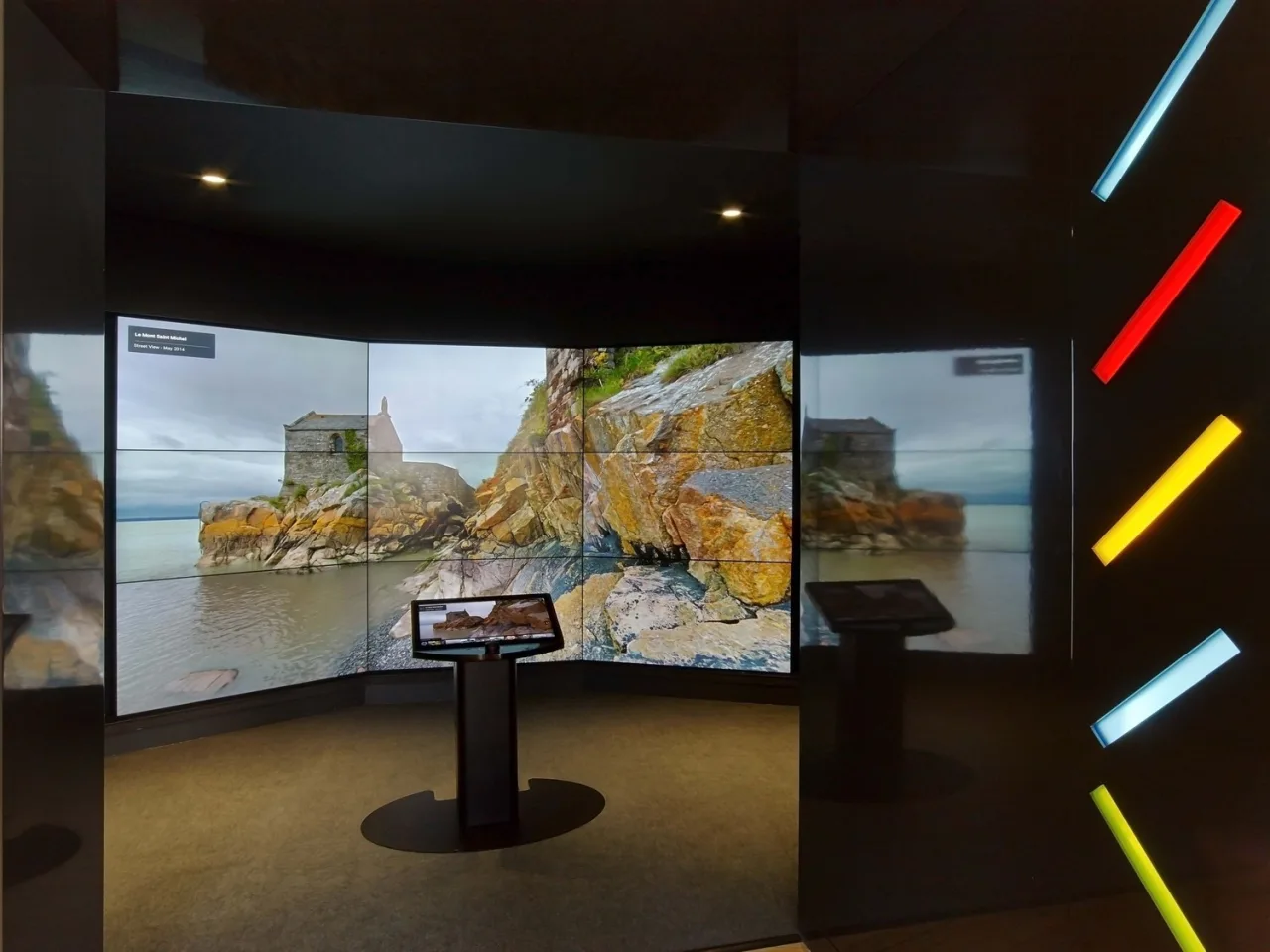
Those experiences can take many forms, and each installation responds to its own context. At Google’s New York office, for example, City Cave is an alcove surrounded by screens that display imagery of New York City in response to emotion-related search terms selected by users. Elsewhere in the office, overhead screens translate speech and movement into shifting waves of light and color.
At Wel at Humana™, a downtown Louisville fitness center open to employees and community members, IA developed a digital installation that wraps two walls of a central stairwell. Motion-tracking LED panels arranged in a freeform composition cycle through shapes and colors that change according to the time of day and day of the week. Positioned along the primary stair connecting the entry with fitness and locker areas below, the installation became a focal point, drawing people through the space while reflecting the activity happening around it.
As the facility began operating, the installation also revealed new possibilities for communication and programming. Seasonal messages and changing digital graphics could extend the life of the feature beyond its initial design intent. That adaptability is an important part of the opportunity: when clients can shape and evolve digital content over time, the experience becomes more relevant to the organization and the people who use it.
Creative technology can also make data more tangible. By translating information specific to a brand, organization, or community into visual and interactive experiences, digital installations can help people see themselves reflected in the environment and strengthen a sense of connection and belonging.
The Strongest Outcomes Depend on Collaboration
When clients, designers, fabricators, technology partners, and other specialists align early around a shared idea, the technology can become an integrated part of the design rather than an added layer. Fully custom solutions may require a greater initial investment, but they can also create experiences that are more closely tied to the identity, use, and long-term ambitions of a place.
Long-term operations matter just as much as the initial concept. Systems need to respond to the level of technical support a client can realistically maintain. An installation that runs continuously may require a different maintenance strategy than one used only during occupied hours, while an adapted off-the-shelf system may be more appropriate when ongoing AV support is limited. The goal is to make the technology intuitive and easy to use, minimizing friction between the experience and the people engaging with it.
Looking ahead, creative technology is moving toward experiences that generate stronger emotional connections and help link people across locations. Interactive displays can become more than digital surfaces; they can act as shared portals between offices, communities, and teams.
The opportunity is not to introduce technology for its own sake. It is to use technology as another design medium, one that can make environments more responsive, expressive, and human.
Have a project in mind?
Let's Talk
Start an Inquiry
Get in Touch