How Brand, Culture, and People Shape Place
A meaningful environment does more than reflect an organization. It helps shape how people connect, work, gather, and move forward.
Design Cannot be Reduced to a Formula
Every organization brings its own ambitions, behaviors, values, histories, and people to a project. The opportunity is to understand how those forces come together and translate them into a place that feels specific, intuitive, and capable of evolving over time.
At IA, we often consider three interconnected forces: brand, culture, and people. Together, they help define not only how an environment looks, but how it works, what it communicates, and how it makes people feel.
Brand establishes a point of view. Culture reveals how an organization behaves. People bring both to life.
When those elements are understood together, place becomes more than a physical setting. It becomes a tool for connection, expression, and change.
The Work Begins with Listening
A’s Strategy team helps uncover the deeper dynamics shaping an organization: its goals, culture, behaviors, challenges, and ambitions. Through research, observation, conversation, and engagement, the team looks beyond surface-level brand statements to understand how an organization actually operates and what its people need from the environment.
This process can reveal where greater connection is needed, where behaviors are shifting, and where design can help support change. Those insights establish a clearer foundation for architectural and experiential decisions throughout the project.
From Identity to Experience
IA’s Experiential Graphic Design team builds on that understanding by exploring how brand, culture, and place can be experienced throughout an environment.
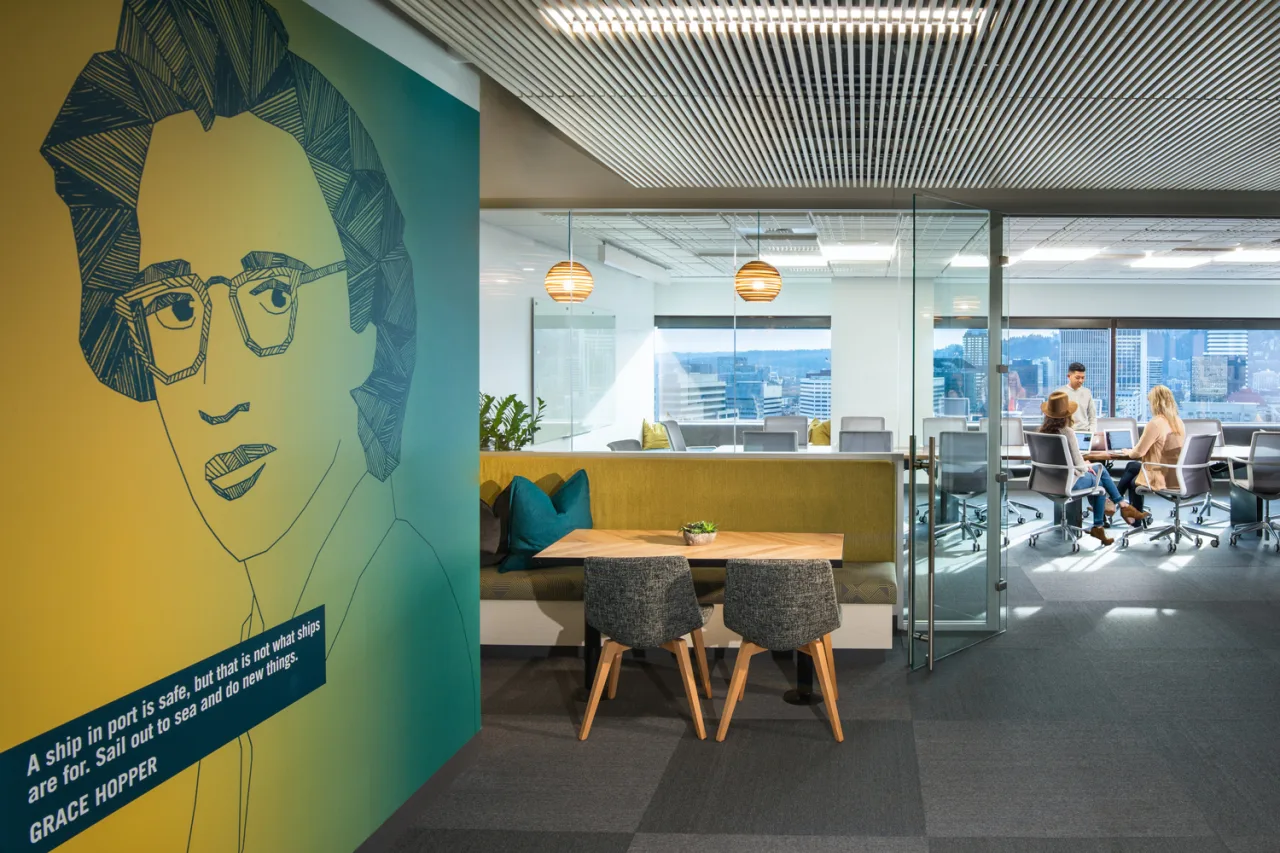
Graphics, wayfinding, storytelling, art, materials, and other visual and sensory cues can communicate identity without relying on overt branding. Sometimes the expression is bold. Other times, it is deliberately subtle. The right approach depends on the organization, its audience, and the experience it wants to create.
That audience is often broader than expected. Employees may be the primary users, but clients, recruits, community members, partners, and visitors all encounter the environment differently. Considering those perspectives early helps create a place that communicates clearly and feels relevant to the people it serves.
Design Intelligence
Design Intelligence brings another layer of insight to the process, helping teams test ideas, understand patterns, and make more informed decisions.
By connecting research, data, technology, and design thinking, Design Intelligence can help reveal how people use environments, where opportunities exist, and how different strategies may perform over time. The value is not the technology itself, but the clarity it can bring to complex decisions.
Together, we help translate what we learn about an organization into an environment that is purposeful, expressive, and responsive.
Culture is Never Static
Organizations grow, merge, restructure, rebrand, and adapt to new expectations. Teams change. Behaviors shift. Ways of working continue to evolve.
For that reason, the strongest environments do more than reflect culture as it exists today. They create conditions for what it can become.
Design can support new behaviors, reinforce shared values, and give people clearer signals about how an organization wants to work. A new headquarters, renovation, or relocation can become a meaningful moment of transition, one that helps people experience change rather than simply hear about it.
Flexibility is part of that strategy. Environments designed for adaptation can accommodate new teams, new technologies, and new ways of gathering without losing their sense of identity.
Across projects, these forces come together in different ways.
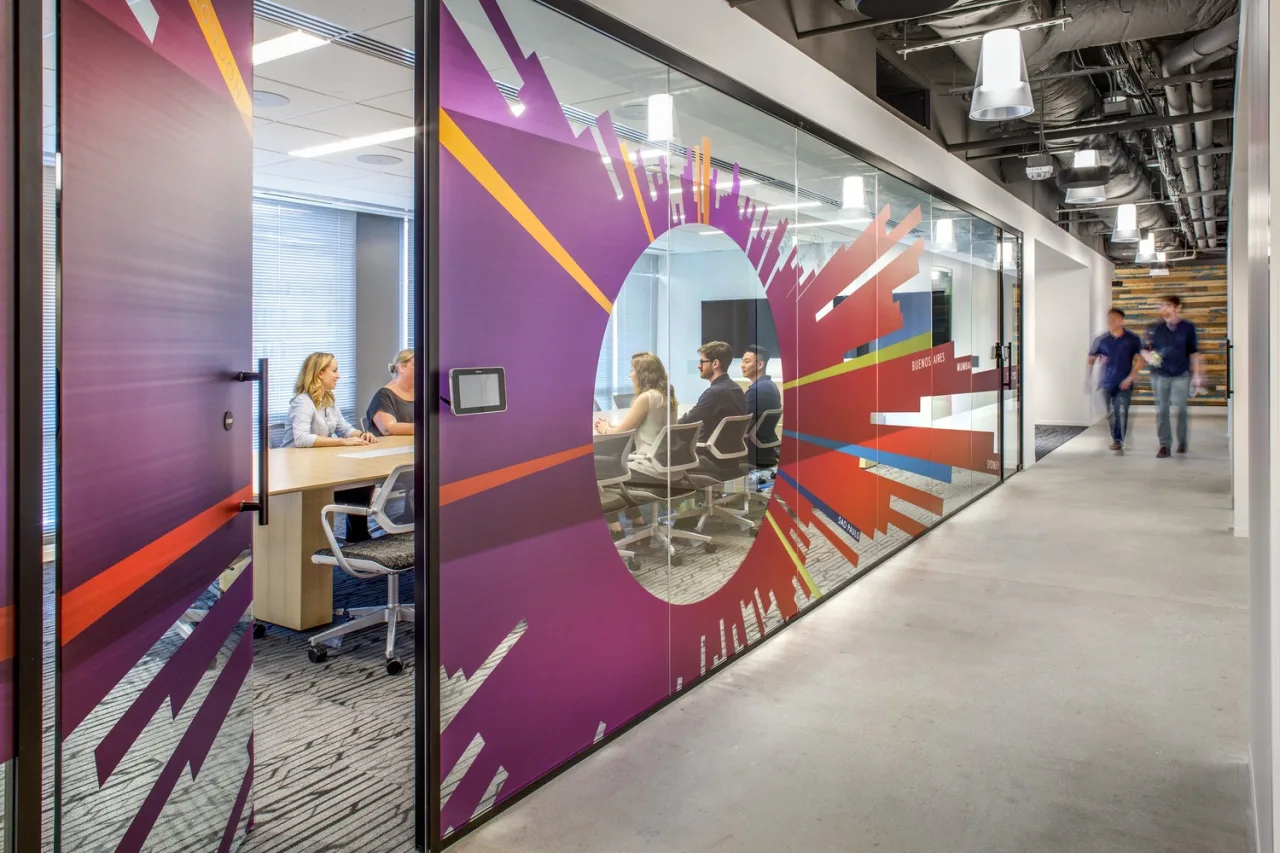
Data is Beautiful
For this client, “data is beautiful” became a guiding narrative for the headquarters. Data-inspired patterns appeared throughout the environment, while a mix of raw and refined materials reflected the company’s egalitarian culture and evolving identity. Flexible settings supported autonomy and allowed teams to adapt as needs changed.
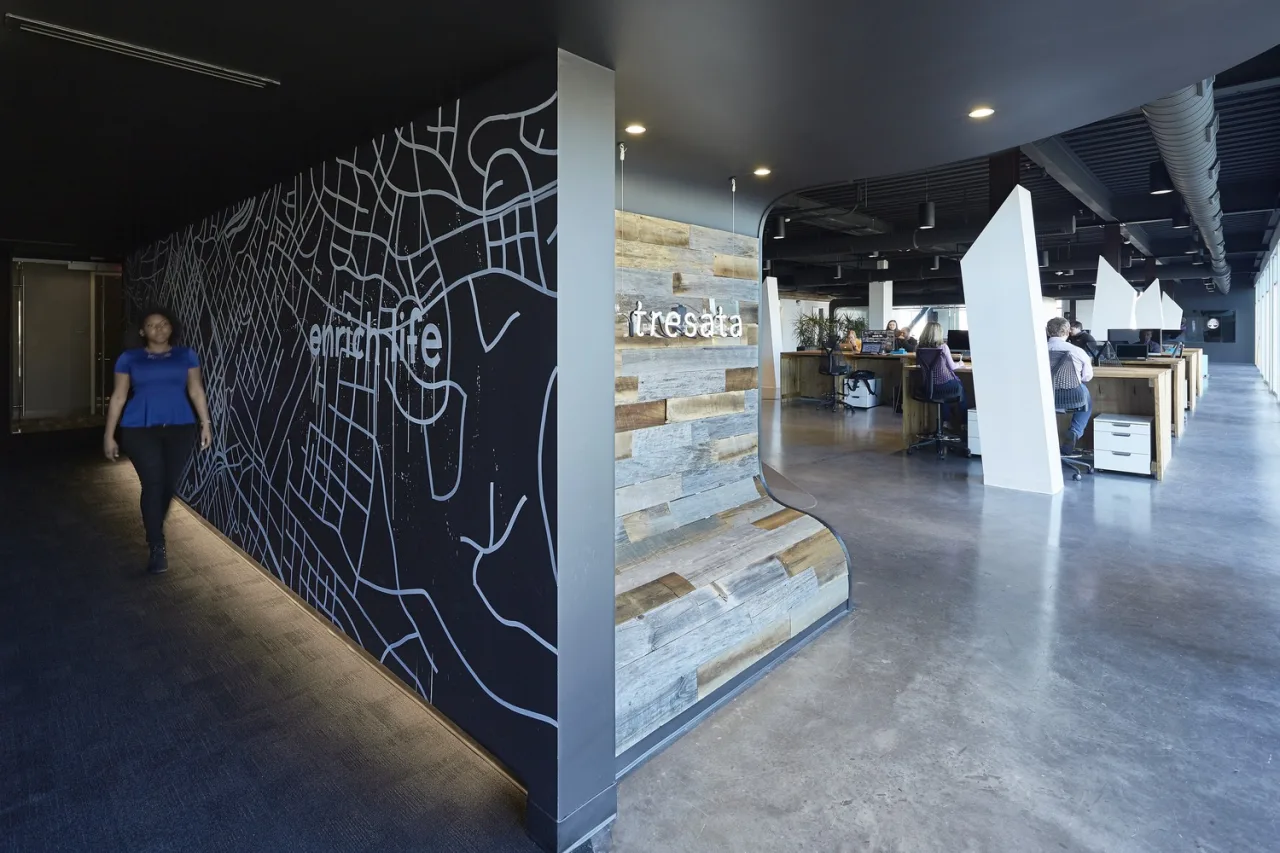
Expression of Character
For Tresata in Charlotte, contrast became a way to express the predictive analytics company’s unconventional character. Light and dark, transparency and enclosure, and unexpected forms created an environment that reflected both the energy of the brand and its emphasis on openness.
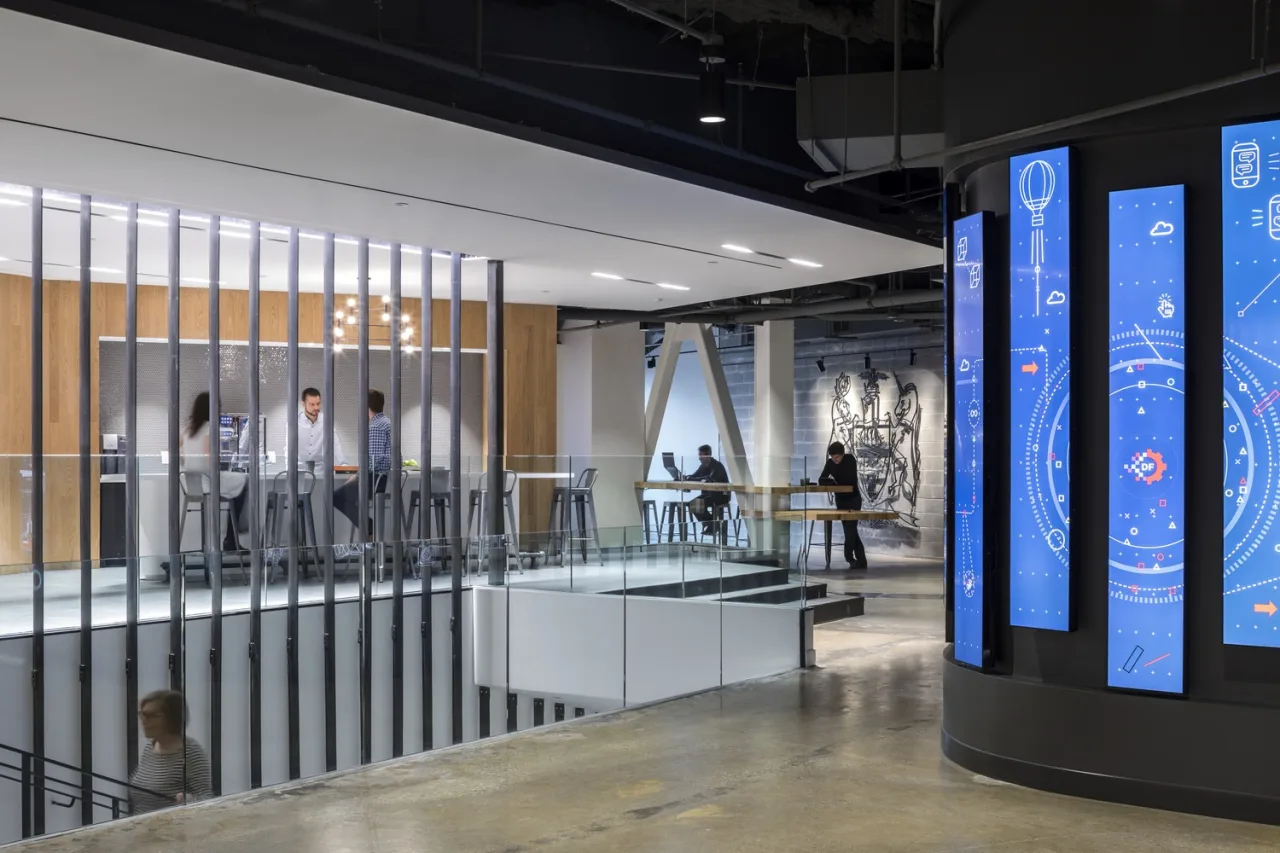
A Clear Spatial Identity
At Scotiabank Digital Factory in Toronto, the design supported a culture built around collaboration and community. A central rotunda, distinct neighborhoods, and shared gathering spaces helped people connect while giving the organization a clear spatial identity.
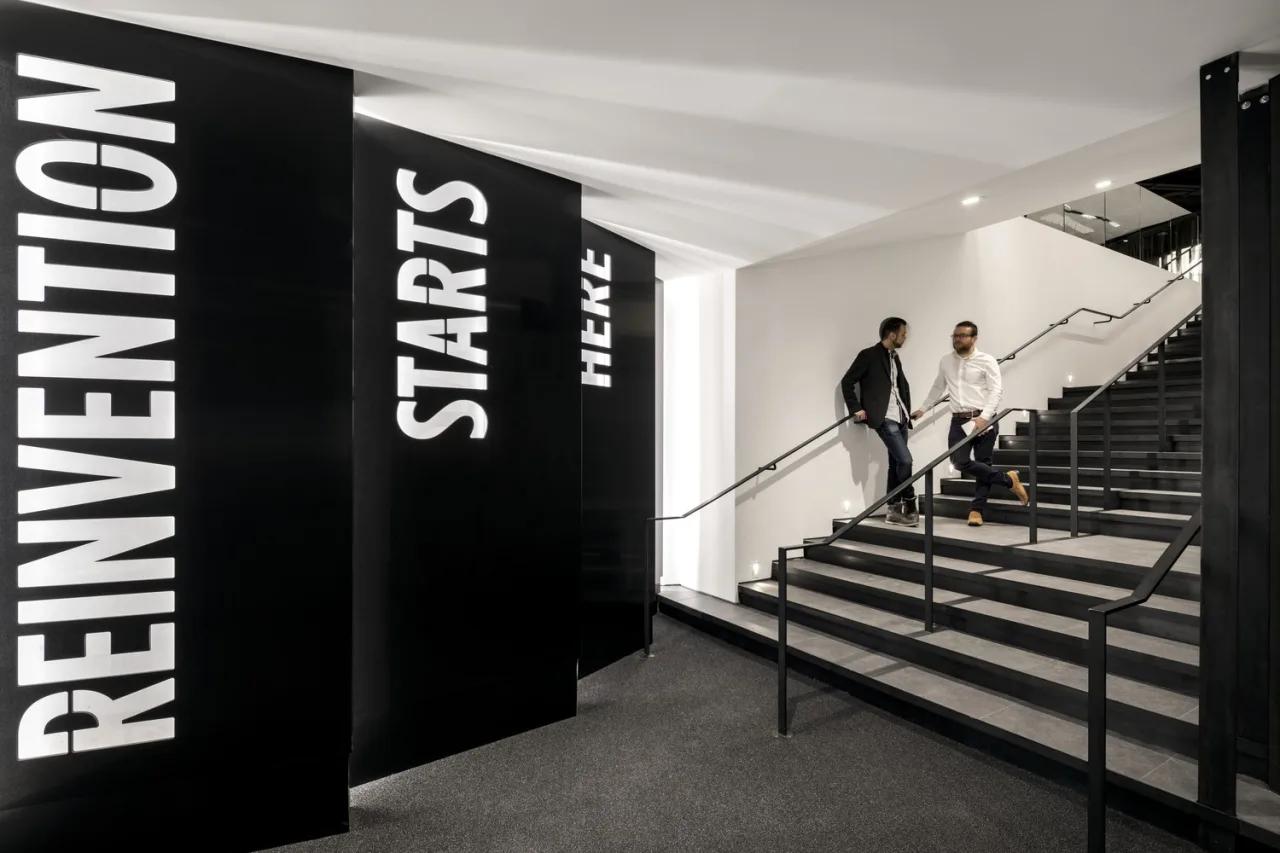
Each response is different because each organization is different.
That is the point.
The most resonant environments do not begin with a style. They begin with an understanding of the organization, its people, and the change it wants to create.
When brand, culture, and people move together, place becomes more than a reflection of who an organization is.
Have a project in mind?
Let's Talk
Start an Inquiry
Get in Touch